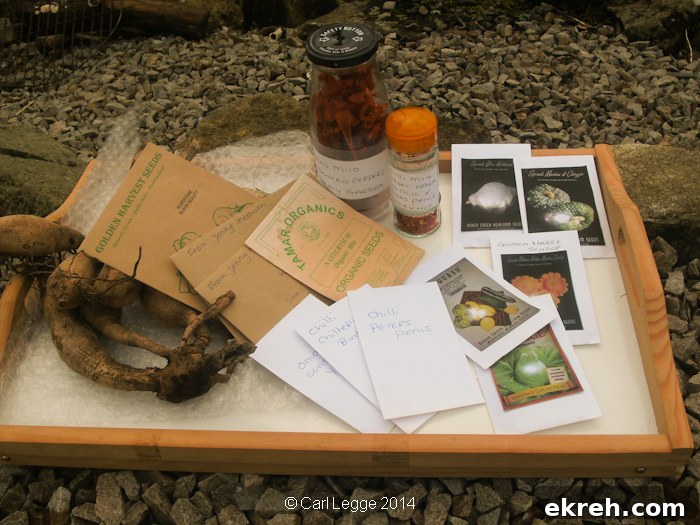
Our Seedy Penpals exchange has made a brilliant start this year. Last week I received a thoughtful, generous parcel from Lorraine containing a variety of seeds and tubers that promise an interesting season ahead. The package was put together with clear care for variety and use, and I’m excited to try several new crops while expanding the vegetables and flowers we already enjoy.
Squash seeds
Lorraine included four different squash varieties sourced from Baker Creek Heirloom Seed Co:
- Pattison Golden Mabre Scallop (summer squash)
- Gelber Englischer Custard (summer squash)
- Marina Di Chioggia (winter squash)
- Blue Hubbard (winter squash)
We grow squash every year with varying degrees of success. Squash respond best to generous feeding and consistent moisture, so we’ll prioritise rich compost, regular watering and timely feeding to give these varieties the best chance. The mix of summer and winter types gives us both fresh summer produce and long-keeping storage squashes for autumn and winter use. I’m looking forward to trying the Marina di Chioggia and Blue Hubbard for their flavour and keeping qualities, and the scallops should be great for quick summer dishes.
Aubergine & chillies
We’re keen on growing a range of chillies, and Lorraine sent two varieties we haven’t grown before:
- Chiltepin — a tiny, round “bird’s eye” type
- Peter’s penis — notable for its unusual shape
She also included aubergine ‘Black Beauty’, which she had over-ordered. Aubergines have been a bit hit-and-miss for us when the summers are cool, but in warmer seasons they do very well. To give these plants an early boost we’ve reclaimed a number of old sash windows from a friend and will use them to build a sturdy cold frame. This will create a warmer microclimate for aubergines and chillies through spring and early summer, improving germination and early growth. I’ll report back with progress and photos once the frame is up and the seedlings are established.
Brassicas
For brassicas Lorraine included several useful seeds and companion plants:
- Cabbage — the heritage variety Wheelers Imperial
- Mustard — giant red
- Mustard — komatsuna
- Nasturtium — organic mixed, intended for companion planting
Wheelers Imperial looks ideal for spring greens and for growing on to form heads. We’ll sow some for spring harvests and try to succession-sow to extend the season. Mustards are a winter staple in our polytunnel: they produce tasty leaves for salads and cooked dishes through the colder months, and their shoots are a welcome early-season green in spring. The mustard seed Lorraine sent came via her earlier Seedy Penpal, Jenny, so it’s nice to see the chain continuing.
Nasturtiums are always useful: they attract pollinators, deter some pests and are entirely edible. Leaves, flowers, buds and seed pods all have a pleasantly peppery flavour and are great in salads, as garnishes and pickled buds can replace capers. We’ll scatter nasturtiums around brassica plantings as companions and enjoy them in the kitchen too.
Onion & dahlias
Lorraine also sent Senshyu Yellow onion seed, a Japanese overwintering type intended for autumn sowing. We’ve decided to focus more on overwintered onions this year, concentrating on varieties that are hard to source or more expensive to buy commercially. Autumn-sown onions often give earlier and stronger yields, so this fits well with our plans for the kitchen garden.
To increase our supply of cut flowers for bouquets and the tussie mussies Debs likes to make, Lorraine included a selection of dahlia tubers. We’ll need to be patient before we know their colours and sizes, but dahlias make excellent late-summer and autumn blooms for cutting. I’m also under strict instructions not to dig up or eat the tubers — duly noted!
Ingredients
Finally, Lorraine added two batches of dried chillies from her own garden. They smell wonderfully intense and will be perfect for drying, grinding or infusing into oils and sauces. With all the varieties she sent, I’m already planning a few recipes to make the most of the different heat levels and flavours.
Overall, this was a fantastic Seedy Penpal parcel — a thoughtful mix of vegetables, flowers and culinary ingredients that should keep us busy across the growing season. I’m grateful for the swaps and shared enthusiasm that the Seedy Penpals project encourages. To see Lorraine’s account of her January patch, check her “Slow January” blog post linked from the original package.