Kimchi: Simple Homemade Recipe and Guide
Kimchi is not widely found in many parts of Yorkshire, largely because there isn’t a large Korean community here. That said, there’s no reason this vibrant, fermented staple shouldn’t have a place on local tables. I’ve made kimchi once—so far—and it’s one of those foods with endless variations: no two batches are exactly the same.
At its heart, kimchi is a pickled vegetable preserve. Vegetables—most commonly Chinese (napa) cabbage—are brined with chilli, salt and sugar, and often a little preserved seafood is added to kick-start fermentation. The result is a lively, tangy condiment or side dish that can transform everyday meals.
Fermentation gives kimchi its distinctive taste and fizz. Think of it like sauerkraut: cabbage allowed to develop umami and acidity over time. The initial aroma and appearance can be surprising, but as the jar matures in the fridge the flavours deepen into something complex, spicy, slightly sweet and pleasantly sour.
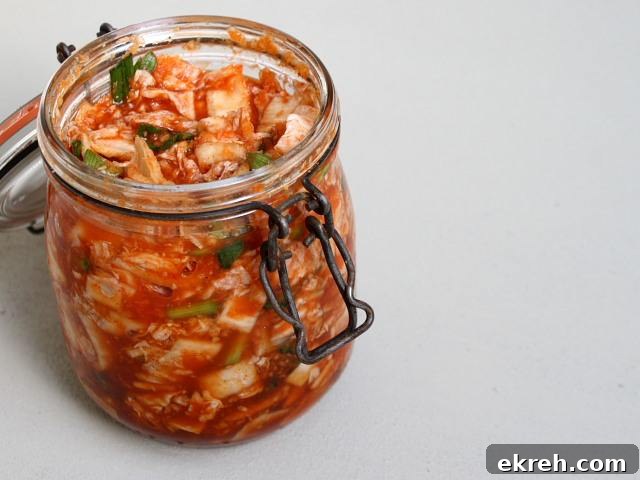
Basic Napa Cabbage Kimchi (Paechu) — Ingredients
These quantities make a straightforward, everyday batch:
– 1 Chinese (napa) cabbage
– 2 tablespoons coarse sea salt
– 2 tablespoons sugar (for salting the cabbage)
For the seasoning paste/brine:
– 20 cloves garlic, finely chopped
– 20 thin slices of ginger, finely chopped
– 4 tablespoons fish sauce (nam pla)
– 4 tablespoons light soy sauce (usukuchi or similar)
– 48 g gochugaru (Korean chilli flakes)
– 2 teaspoons jarred salted shrimp
– 50 g sugar
– a little water to loosen the mixture if needed
– 50 g spring onions, sliced into 2.5 cm chunks
– 75 g julienned carrots
Method
1. Prepare the cabbage: Slice the cabbage lengthways in half, then quarter each half into roughly 2.5 cm wedges. Toss the cabbage with 2 tablespoons coarse sea salt and 2 tablespoons sugar, then refrigerate overnight. The cabbage will release a lot of water; that liquid is not needed for the final jar.
2. Make the seasoning: The next morning, combine the chopped garlic, chopped ginger, fish sauce, light soy sauce, gochugaru, jarred salted shrimp and 50 g sugar in a bowl. Stir until the sugar dissolves and the mixture is evenly combined. Add a little water if the paste seems too thick; it should be loose enough to coat the vegetables thoroughly.
3. Add vegetables: Stir in the sliced spring onions and julienned carrots so they are well-coated in the seasoning.
4. Combine with cabbage: Drain and discard the liquid drawn from the cabbage overnight. Add the seasoning mixture to the cabbage and mix thoroughly until every leaf is covered.
5. Pack and refrigerate: Firmly pack the kimchi into a clean Kilner jar or equivalent airtight container. Refrigerate for about two weeks before eating. During this time fermentation will begin, and flavours and texture will develop.
What to Expect and How to Use Kimchi
After around two weeks the kimchi will be tangy, fizzy and aromatic. The cabbage should remain crisp with a lively acidic bite balanced by heat, salt and sweetness. The strong aroma can startle children or anyone unfamiliar with fermented foods—more for adventurous adults.
Kimchi is versatile: eat it on its own as a side, add it to soups, stews or stir-fries, or use it to top hot dogs and burgers for a spicy, tangy kick. Store it in the fridge and enjoy it over several weeks; flavours will continue to evolve, becoming sharper with time.
Notes and Tips
– Quantities and seasonings are flexible—kimchi has many regional and household variations, so feel free to adjust chilli level, salt and sweetness to taste.
– Use clean utensils to pack and remove kimchi to help it keep longer.
– If you prefer a milder ferment, reduce the amount of gochugaru or shorten the refrigeration time before tasting.
This recipe is adapted from the Momofuku cookbook by David Chang, which offers further inspiration for variations and uses.