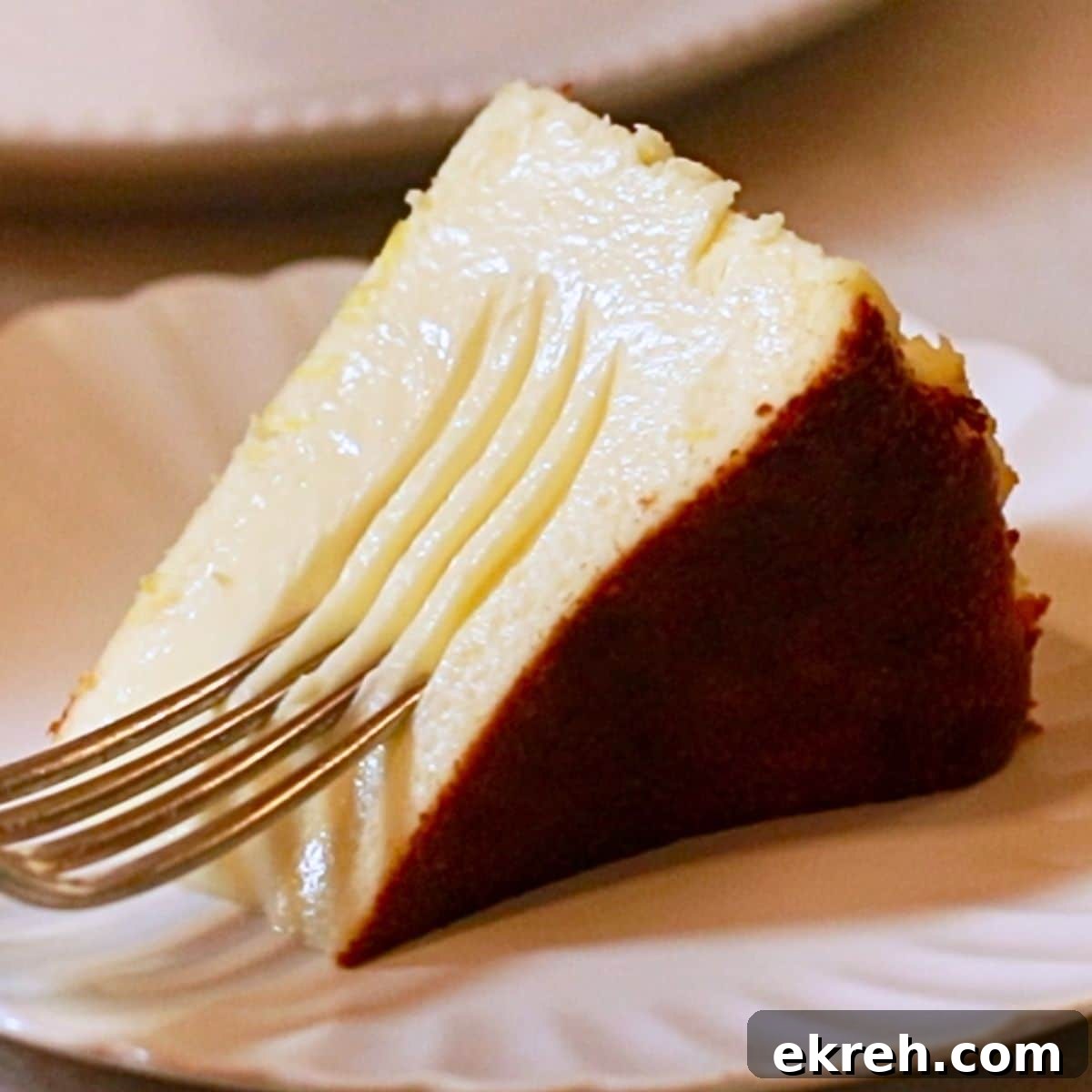
Here’s a simple, reliable method for making a perfectly creamy Basque cheesecake at home. This gluten-free, crustless cheesecake comes together by whisking ingredients in a bowl—no special equipment required.
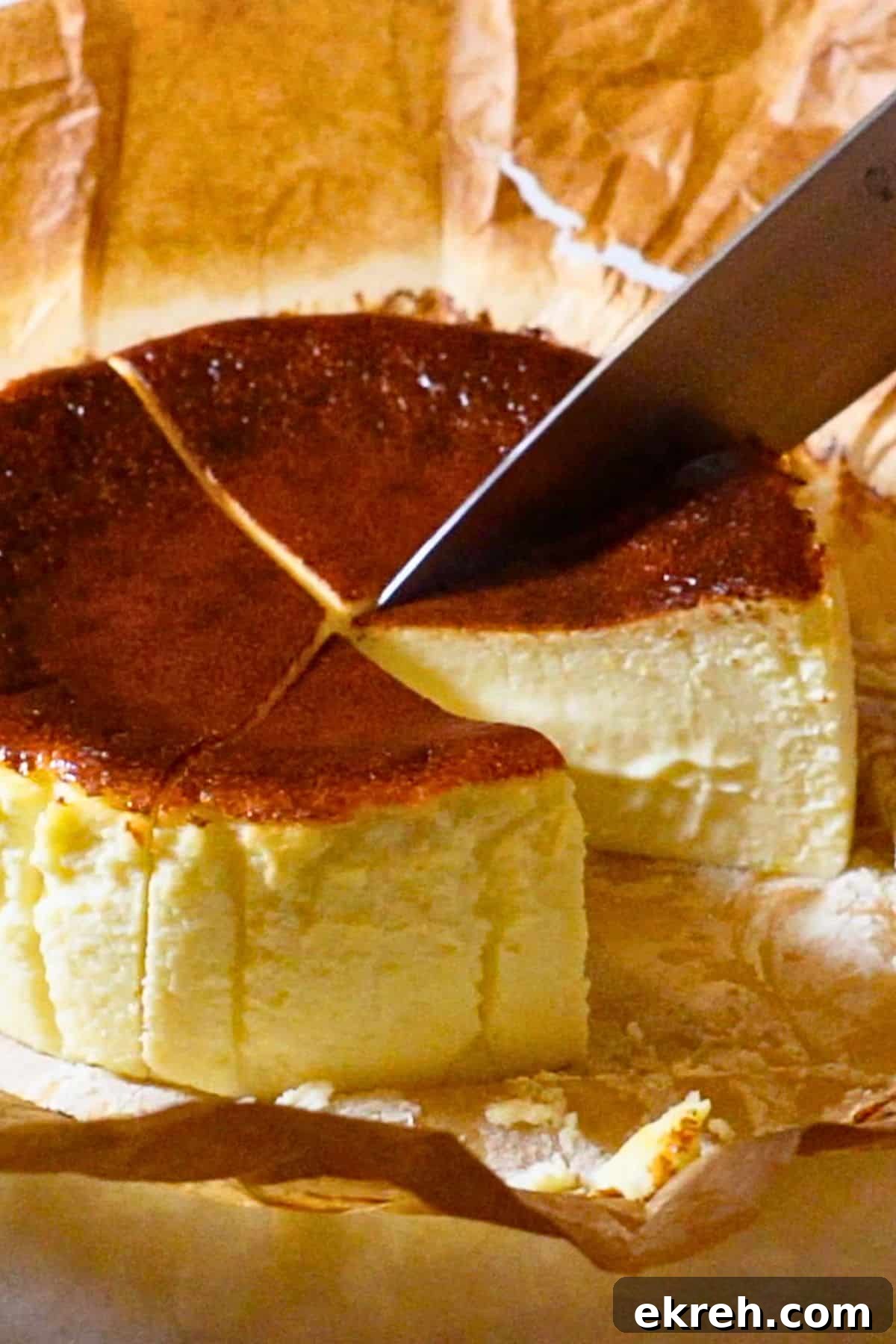
What Is Basque Cheesecake?
Basque cheesecake is a distinctive style of baked cheesecake that stands out for its deeply browned, almost caramelized top and its luxuriously soft interior. Unlike denser varieties such as New York–style cheesecake, Basque cheesecake is baked at a high temperature for a shorter time. That contrast in baking creates a firm, browned exterior while the center stays velvety and custard-like—somewhere between crème brûlée and pastry cream in texture.
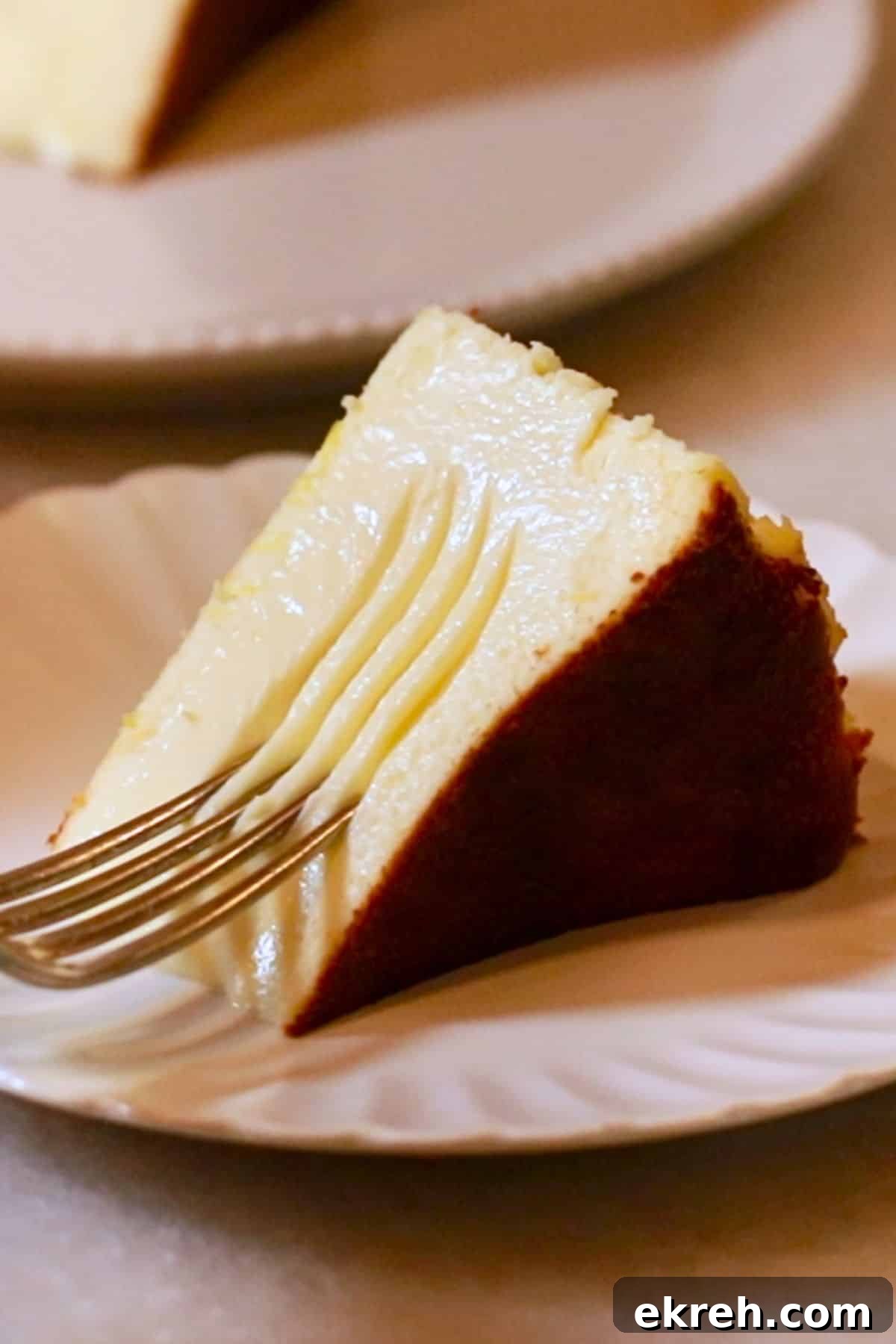
The most important factor for a true Basque cheesecake is the baking time and temperature—those two variables determine how soft or set the center will be. Below you’ll find practical tips and step-by-step instructions to help you achieve consistent results at home.
Let’s get started! 💪🏻
4 Reasons You’ll Love This Basque Cheesecake
Easy to Make
This Basque cheesecake requires simple ingredients and minimal tools. There’s no crust to prepare and no complicated techniques—just whisk, bake, and chill.
Gluten-Free & Crustless
Because it’s crustless and uses cornstarch instead of flour, this recipe is naturally gluten-free and suitable for guests avoiding wheat.
Creamy, Custard-Like Texture
The inside stays lusciously creamy if you follow the baking guidance and allow sufficient chilling time. The texture deepens and becomes silkier after a day refrigerated.
Bright, Refreshing Flavor
A touch of lemon zest and lemon juice adds just the right amount of brightness without needing sour cream or additional cheeses.
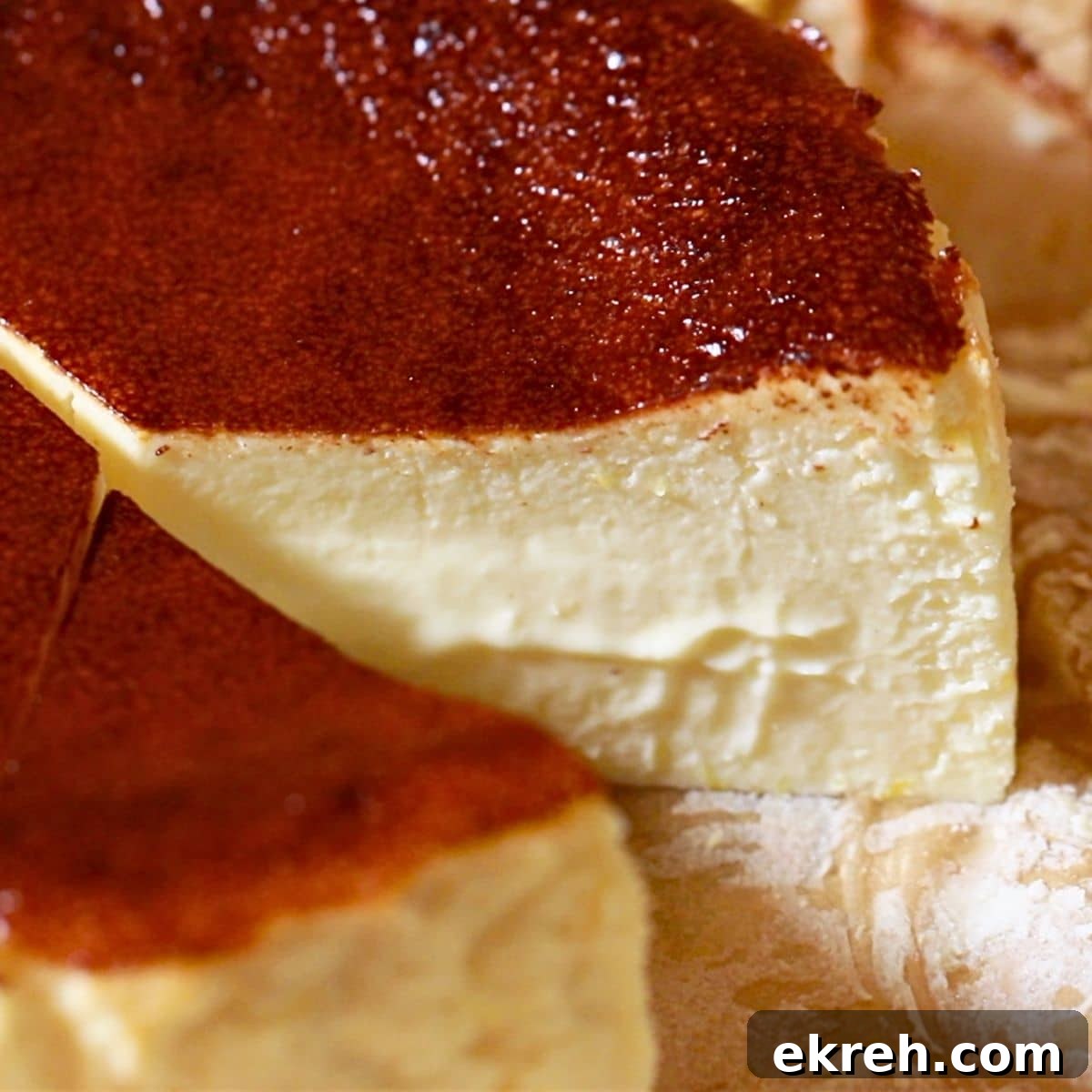
5 Success Tips for Making Basque Cheesecake
These five tips address the most common problems bakers encounter when attempting Basque cheesecake for the first time.
Tip 1. Use room-temperature cream cheese
Softened cream cheese blends smoothly and prevents lumps in the batter. If you forget to leave it out, cut the block into small pieces and gently warm in short bursts—just until softened, not melted.
Tip 2. Avoid over-whipping
Mix until smooth but don’t incorporate too much air. Over-whipping can make the batter rise and collapse, leading to cracks or an uneven texture.
Tip 3. Baking time is crucial (most important!)
Baking longer results in a firmer, more set center; baking too briefly gives a runny center. Look for a gentle wobble in the middle—like a very soft pudding—when you take it from the oven. Oven temperatures and performance vary, so use the times below as a starting point and adjust for your oven.
Tip 4. Chill long enough before slicing
The cheesecake firms up as it cools. Wait at least 5–6 hours before slicing; for best flavor and texture, chill 24 hours. The longer it sits, the creamier and more cohesive the texture becomes.
Tip 5. Use a hot knife to slice
Warm your knife under hot water and wipe it dry between cuts to get clean, neat slices.
Video: Watch How to Make Basque Cheesecake
A step-by-step video can be helpful to see the desired batter consistency and the wobble you should expect when the cake is done. If you prefer a visual guide, check the video associated with this recipe.
Tips for the Ingredients
- Granulated sugar: Use white sugar for a clean cream-cheese flavor and a lighter texture.
- Salt: A small pinch of table salt balances the sweetness and enhances the cream cheese flavor.
- Cornstarch: Helps the cheesecake set while keeping it tender, especially when using a generous amount of cream.
- Lemon zest and juice: Provide a fresh, bright note—use both for best flavor.
- Cream cheese: Full-fat cream cheese gives the best texture and flavor; soften it first.
- Eggs: Give structure and richness to the batter.
- Heavy cream: Use 35–45% milk fat for a silky interior; warming it slightly helps it incorporate smoothly.
- Vanilla: Extract is fine, or use scraped vanilla bean for extra aroma.
How to Make Basque Cheesecake
Preparation
- Soften cream cheese: Leave it at room temperature until fully softened.
- Line the pan: Fit a 6-inch round pan with tall parchment paper so the batter is contained as it rises—double the paper if needed.
- Preheat: Heat the oven to 460°F (237°C).
Aya’s quick tip:
You don’t need to grease the pan; the parchment makes removal easy once the cake is cool.
Make the cheesecake batter
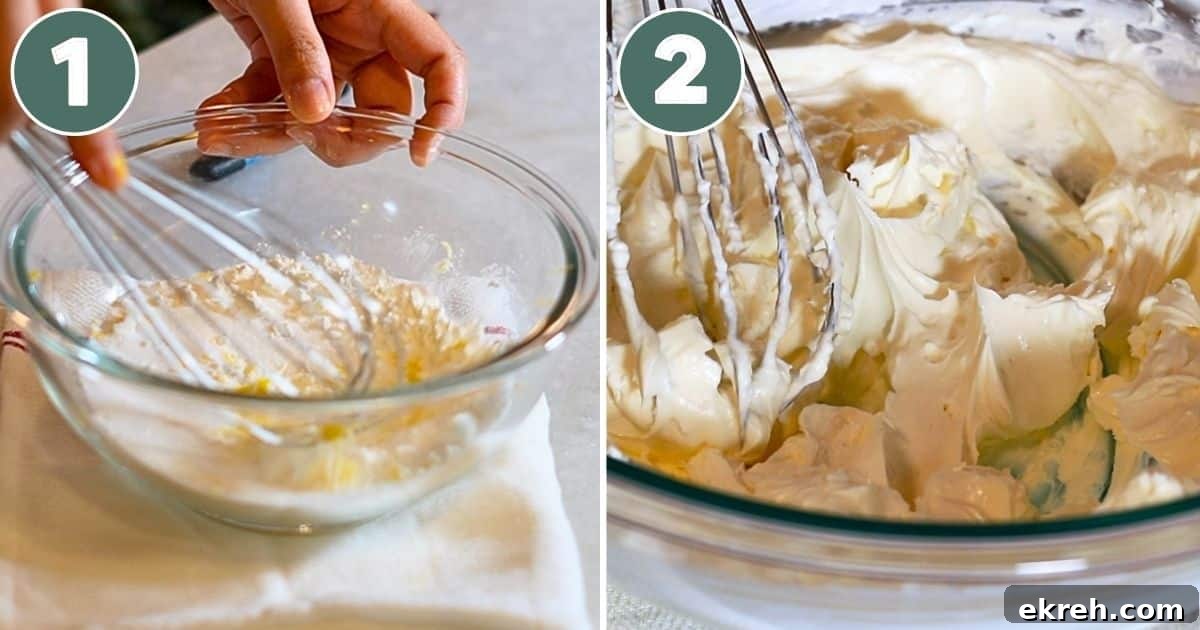
- Whisk dry ingredients: In a small bowl, whisk sugar, salt, cornstarch and lemon zest until uniform and free of cornstarch lumps.
- Smooth the cream cheese: In a large bowl, whisk softened cream cheese until smooth—avoid whipping it.
- Combine: Add the dry mixture to the cream cheese and whisk until creamy.
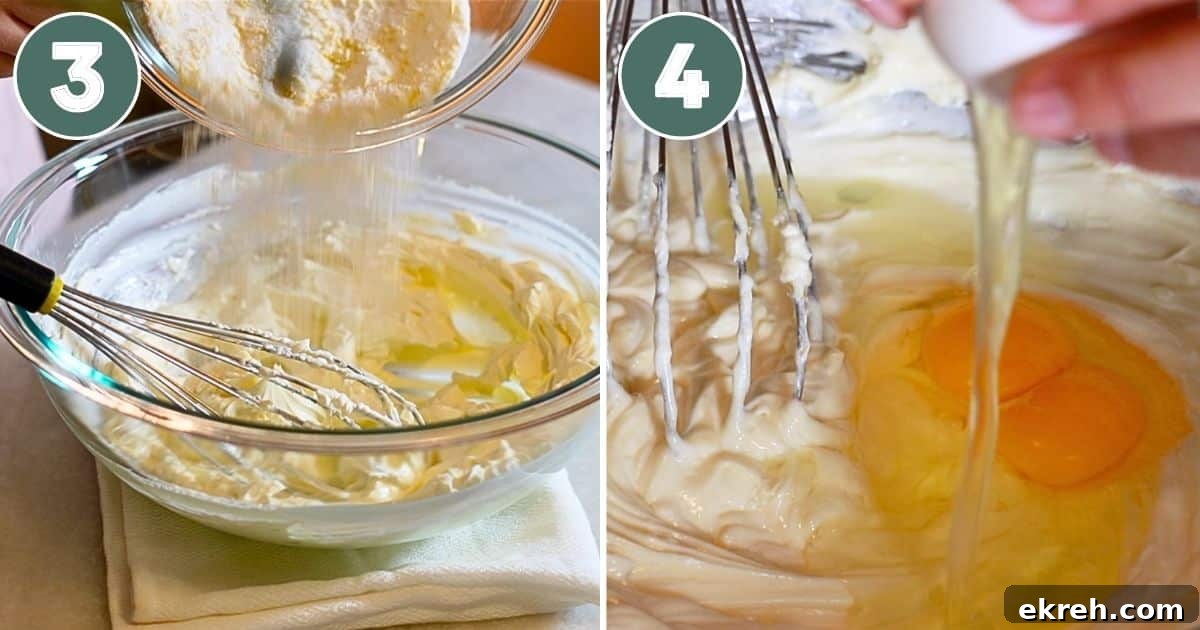
- Add eggs: Add eggs one at a time and whisk until smooth, again avoiding excessive air incorporation.
- Add warm cream: Stir in gently warmed heavy cream in two additions until combined.
- Finish: Fold in lemon juice and vanilla with a spatula, scraping the bowl to ensure everything is evenly mixed.
Bake and chill
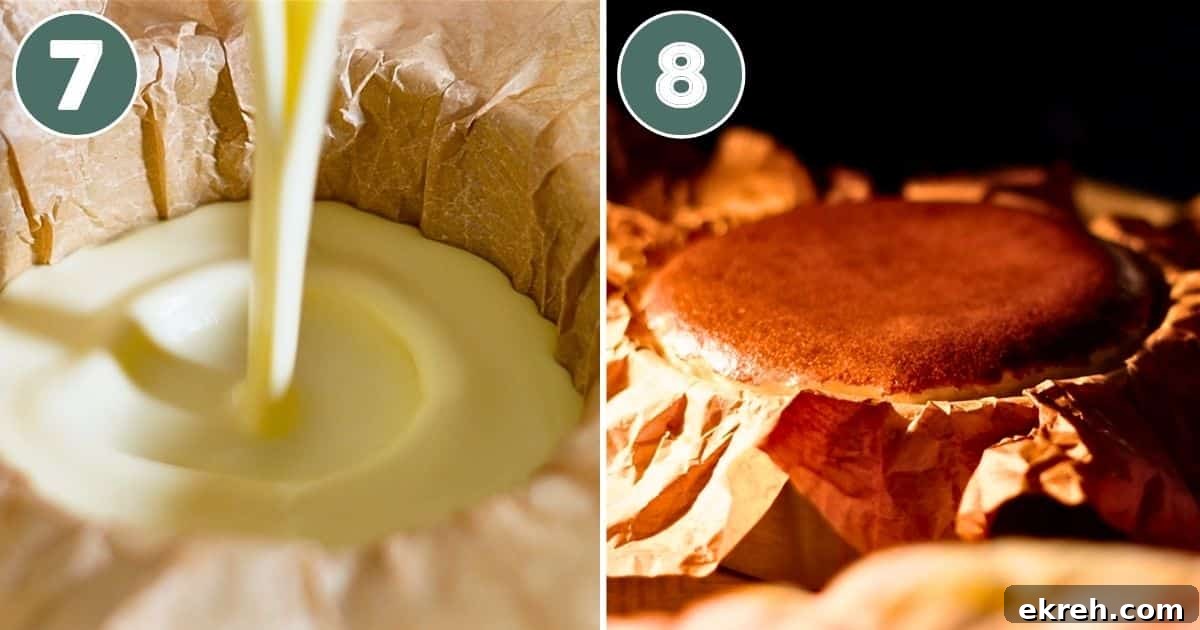
- Pour batter into the pan: Don’t worry about surface bubbles; most will pop during baking.
- Bake: Place the pan on a baking sheet in the center of the preheated oven. Bake at 460°F (237°C) for about 30 minutes. The top should be deeply browned and the center should still wobble like a very soft pudding. Adjust time slightly for your oven if needed.
- Cool and chill: Cool on a wire rack, then refrigerate at least 5–6 hours, preferably 24 hours for best texture.
- Slice and serve: Use a hot, dry knife wiped between cuts to get clean slices.
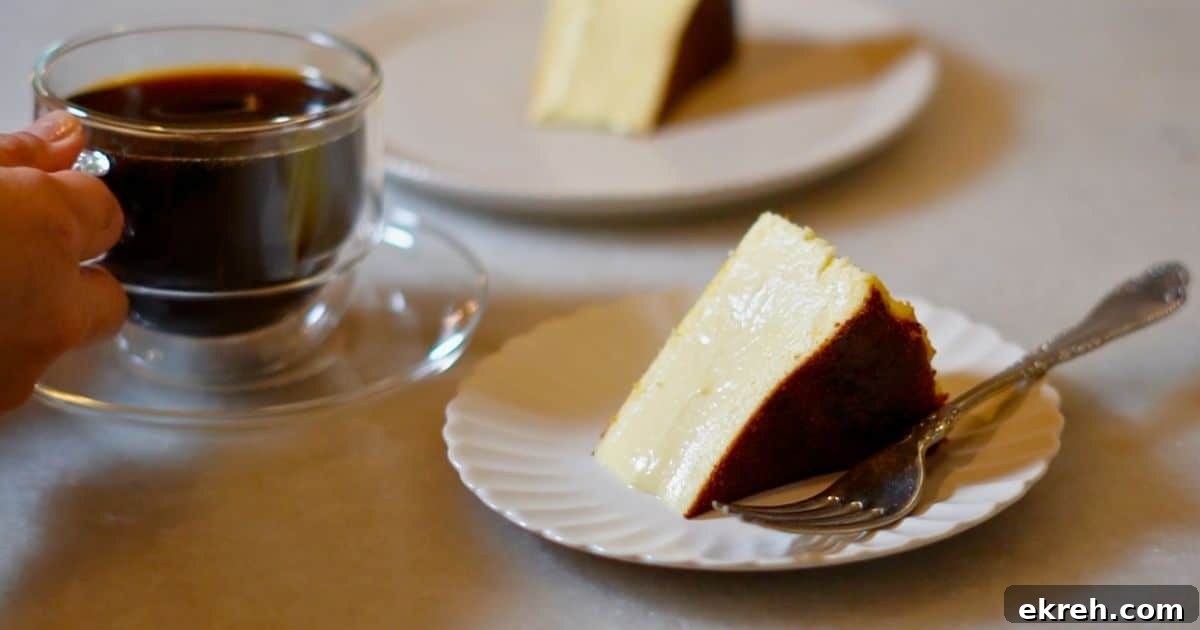
Enjoy your creamy Basque cheesecake with coffee or tea. It’s rich, comforting, and surprisingly easy to make—perfect for sharing or savoring a slice on your own.
Aya xx
FAQs
How was Basque cheesecake created?
Basque cheesecake originated in San Sebastián, Spain, in the 1980s at a local restaurant known for its rustic, caramelized-topped cheesecake.
What makes it different from regular baked cheesecakes?
It is baked at a higher temperature and for a shorter time, producing a deeply browned top and a soft, custard-like center.
How should I store it?
Wrap the surface lightly and store in an airtight container in the refrigerator for up to 4 days.
Can I freeze it?
Yes. Freeze for a few months and thaw overnight in the refrigerator.
Is this recipe gluten-free?
Yes. This version uses cornstarch instead of flour and is crustless, making it suitable for gluten-free diets.
Troubleshooting Tips
Surface not browned enough?
If the cake is already nearly done but the top isn’t dark enough, briefly use a broiler to finish the top. Watch carefully—this takes only a few minutes.
Center feels underbaked?
If the cake is cooled but still too soft for your liking, extra refrigeration time will help it set. The center firms up considerably as it chills.
I overbaked it—what now?
An overbaked Basque cheesecake will be firmer and less custardy, but it will still taste good. Chilling overnight usually improves texture and flavor.
Why is my batter lumpy?
Lumps usually mean the cream cheese wasn’t softened enough. Start by whisking the cream cheese until completely smooth before adding other ingredients.
More Cheesecake Recipes
If you enjoy this Basque cheesecake, try other styles such as New York cheesecake, matcha baked cheesecake, no-bake strawberry cheesecake, or mini baked strawberry cheesecakes for variety and seasonal flair.
Did you try the recipe?
Share your honest feedback in the comment section. I’d love to hear how it turned out and how you served it for friends and family.
Thank you! – Aya
Easy Basque Cheesecake — Recipe
Easy Basque Cheesecake
A creamy, crustless, gluten-free Basque cheesecake with a caramelized top and custardy center. Serves 8.
Ingredients
- 100 g (½ cup) granulated sugar
- ⅛ tsp salt
- 17 g (2 tbsp) cornstarch
- ½ lemon, zest only
- 450 g (2 cups) cream cheese, room temperature
- 150 g (about 3) eggs
- 240 g (1 cup) heavy cream, gently warmed
- 2 tsp lemon juice
- ½ tsp vanilla extract
Equipment
- 6-inch (16 cm) round pan
- Parchment paper
- Mixing bowls
- Whisk and rubber spatula
Method
- Preheat oven to 460°F (237°C). Line a 6-inch pan with tall parchment.
- Whisk sugar, salt, cornstarch and lemon zest until smooth.
- Whisk softened cream cheese until smooth. Add dry mixture and whisk to combine.
- Add eggs and whisk until smooth, avoiding over-whipping.
- Stir in gently warmed heavy cream in two additions, then mix in lemon juice and vanilla.
- Pour batter into the prepared pan and bake on the middle rack for about 30 minutes, until the top is deeply browned and the center wobbles like a soft pudding.
- Cool on a wire rack, then refrigerate at least 5–6 hours (24 hours best). Slice with a hot knife and serve.
Notes
Store wrapped in an airtight container in the fridge for up to 4 days. You can freeze portions for longer storage; thaw overnight in the refrigerator.
Nutrition (per serving)
Calories: 383 kcal • Carbohydrates: 19 g • Protein: 7 g • Fat: 32 g