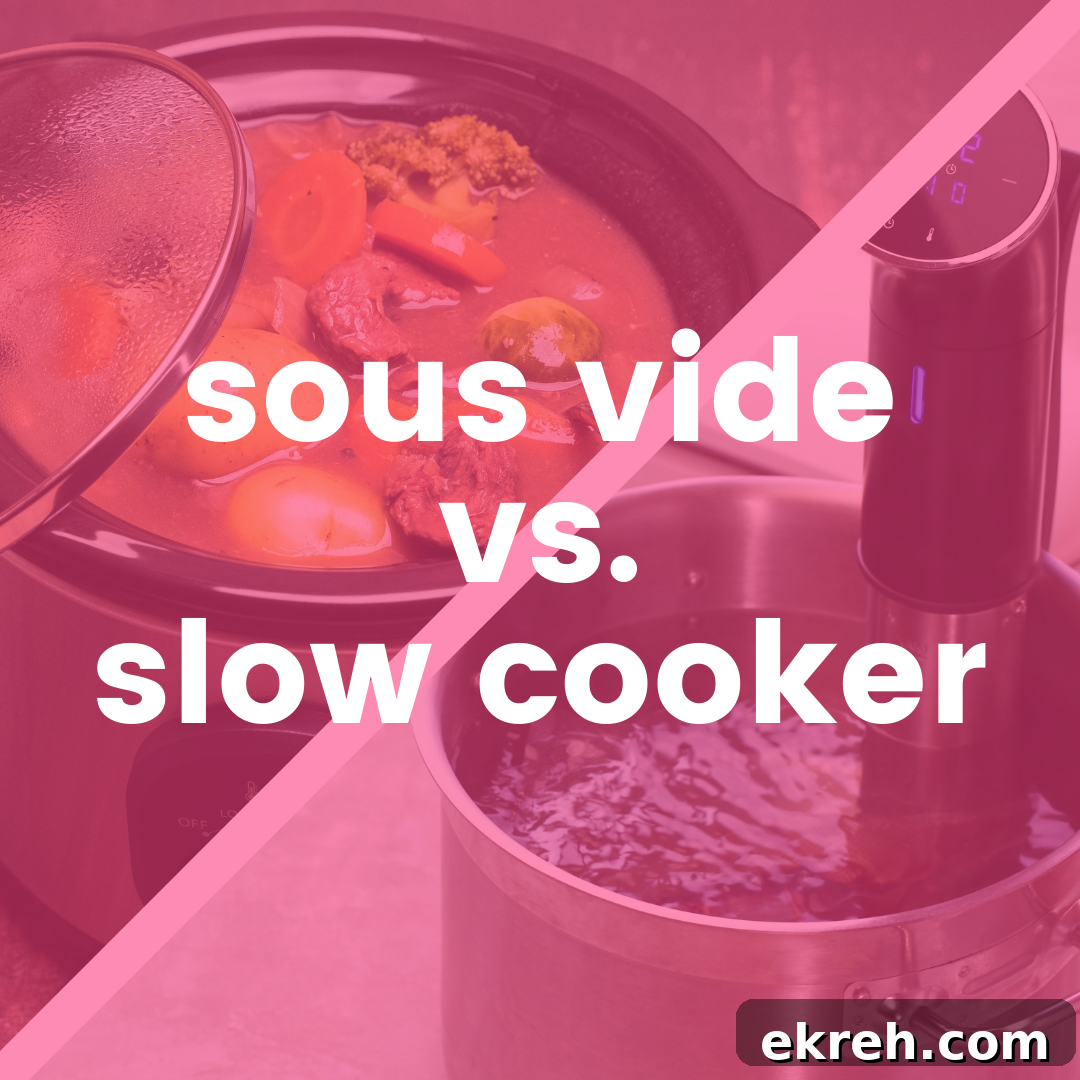
Sous vide and slow cooking share a lot in common: both are largely hands-off, require minimal active time at the stove, and take longer than traditional methods like oven roasting or grilling. But they’re not the same. This article explains how each method works, what they do best, and how to choose between them.
What is sous vide cooking?
Sous vide is a precision cooking technique where food is sealed in a food-safe bag or jar and cooked in a water bath held at a set temperature for an extended time. The key idea is steady, exact heat applied for longer than you might with conventional methods, producing consistent results from edge to edge.
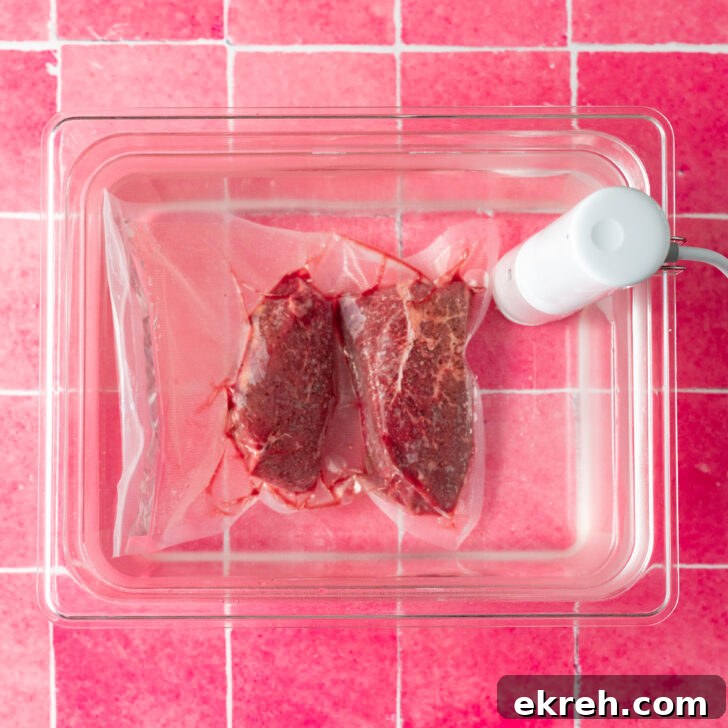
To sous vide, you place an immersion circulator into a water container—this can be a pot, a heat-safe bin, or a purpose-made sous vide container—and set the exact temperature you want. The immersion circulator heats the water and circulates it, keeping the bath at one steady temperature so your food cooks evenly.
An immersion circulator makes a sous vide bath work like a precise hot tub: it heats and circulates the water to hold a constant temperature.
Sous vide temperatures typically range from about 110°F to 190°F (43°C–88°C), depending on the food and the desired doneness. Most circulators aren’t designed to cool water below roughly 60°F or heat above about 200°F, so they excel in the moderate temperature range used for cooking proteins, eggs, and many desserts.
This method is especially prized for items where precise temperature control matters: steaks and other premium cuts, eggs, seafood, and roasts you want served medium-rare or medium. Because you choose the exact finished temperature, you can reliably hit the same doneness every time with minimal risk of overcooking.
If you’re new to sous vide, a basic setup—an immersion circulator and a stable container—is enough to get started. Beyond that, common accessories include vacuum sealers or other air-removal methods, bag clips or magnets to keep bags submerged, and a hot, heavy skillet or torch for a quick sear after the water bath.
Sous Vide School
For cooks who want a structured way to learn, beginner guides and courses cover everything from basic technique and food safety to finishing methods and recipes that save time and money.
What is slow cooking?
Slow cooking uses a dedicated appliance—commonly called a slow cooker or Crock-Pot—to simmer food at relatively low temperatures for hours. You add ingredients to the removable ceramic or metal insert, choose a setting (usually Low or High), and let the cooker maintain those temperatures with minimal supervision.
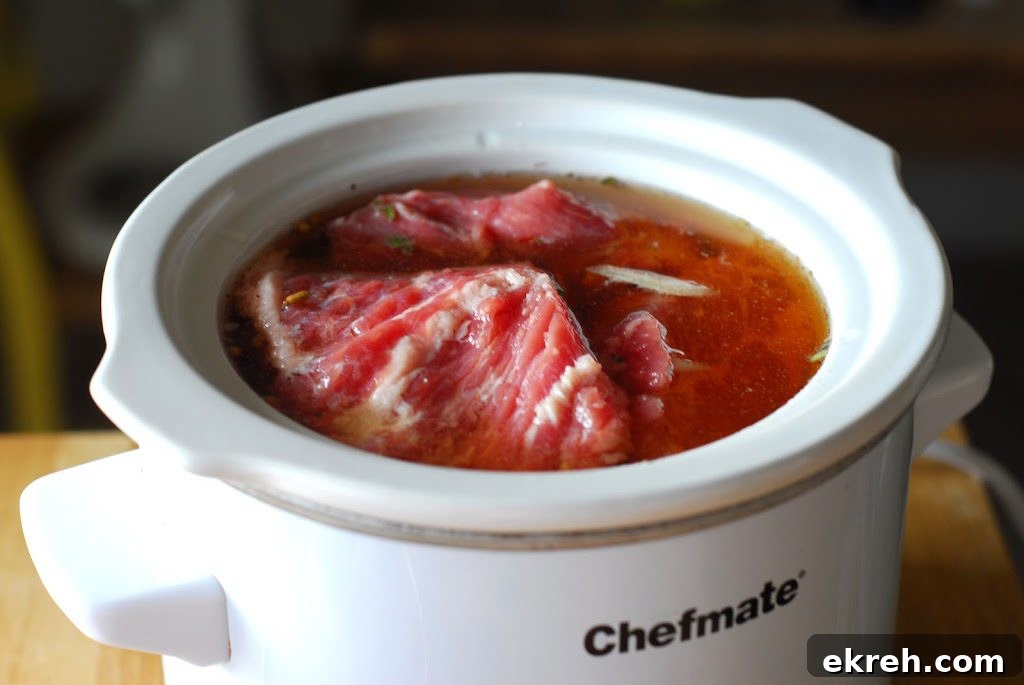
Slow cooker temperatures are approximate: Low is generally around 200°F (93°C) and High closer to 300°F (149°C). Typical cooking times are roughly 6–8 hours on Low or 3–4 hours on High, though exact times vary by model and recipe.
Slow cooking shines with braises, soups, stews, shredded meats, and large cuts that benefit from long, moist heat to break down connective tissue and develop rich flavor. It’s a set-it-and-forget-it approach that’s especially convenient for busy days.
What’s the difference between the two?
They share key advantages—low-and-slow results, hands-off operation, and convenience for meal prep—but their goals and outcomes are different. Here are the main contrasts:
- Precision vs. approximation: Sous vide delivers exact temperatures, so you can cook to a precise doneness. Slow cookers offer general Low/High settings and produce more uniform, fully cooked results rather than a specific internal temperature target.
- Prep and cleanup: Sous vide often requires vacuum sealing or using airtight bags and a little more prep. Cleanup is usually simple because the food stays in the bag. Slow cooking requires less prep up front—just dump ingredients into the insert—but you must clean the cooker afterward, which can be messy.
- Suitability for delicate or expensive foods: Sous vide excels with finicky or premium ingredients—seafood, scallops, filet mignon, tenderloin, eggs, and custards—because precise temperature control prevents overcooking. Slow cooking can ruin delicate textures, so it’s less appropriate for those items.
Equipment needed for each method
Slow cooking is simple: a slow cooker with a removable insert is all you need. Optional liners or inserts can make cleanup easier but aren’t required.
Sous vide requires an immersion circulator and a suitable container for the water bath (stockpot, cooler, or a purpose-made container). Helpful extras include:
- a heavy skillet or cast-iron pan for searing after the bath,
- clips, racks, or magnets to keep bags submerged,
- a vacuum sealer and bags or reliable bagging and air-removal methods for sealing food.
So, which one should I use?
Choose the slow cooker for dishes designed to break down over long, moist heat:
- Soups and stews
- Large roasts that should fall apart
- Meats you plan to shred
Choose sous vide when you want precise control, tender and evenly cooked proteins, or results that are hard to achieve with conventional methods:
- Steak and premium beef cuts
- Seafood and delicate fish
- Roasts that should be medium-rare, such as prime rib
- Eggs and custard-style desserts
- Pork chops and other cuts where exact doneness matters
Chicken is an example where sous vide often has an edge: it minimizes the risk of drying out while still reaching a safe temperature, though a slow cooker can be the right choice for shredded or fall-apart chicken in soups and shredded chicken recipes.
Both methods are valuable tools in a modern kitchen. Use the slow cooker for rustic, hands-off braising and tender shreddable meats; use sous vide when you want repeatable, restaurant-quality results with perfect doneness and minimal risk.