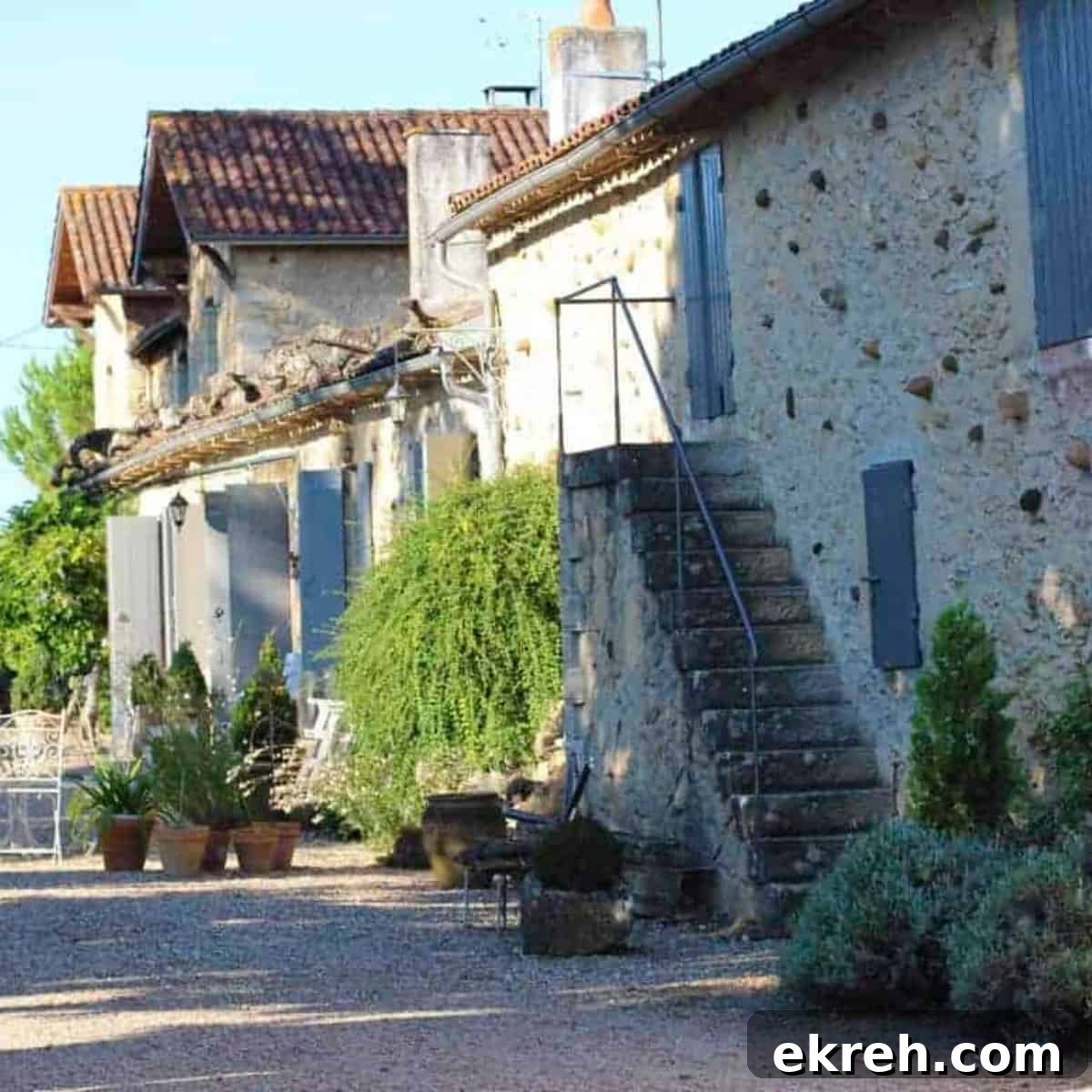
Frédéric Lalande and Château Piada: Barsac’s Botrytized Sweet Wines
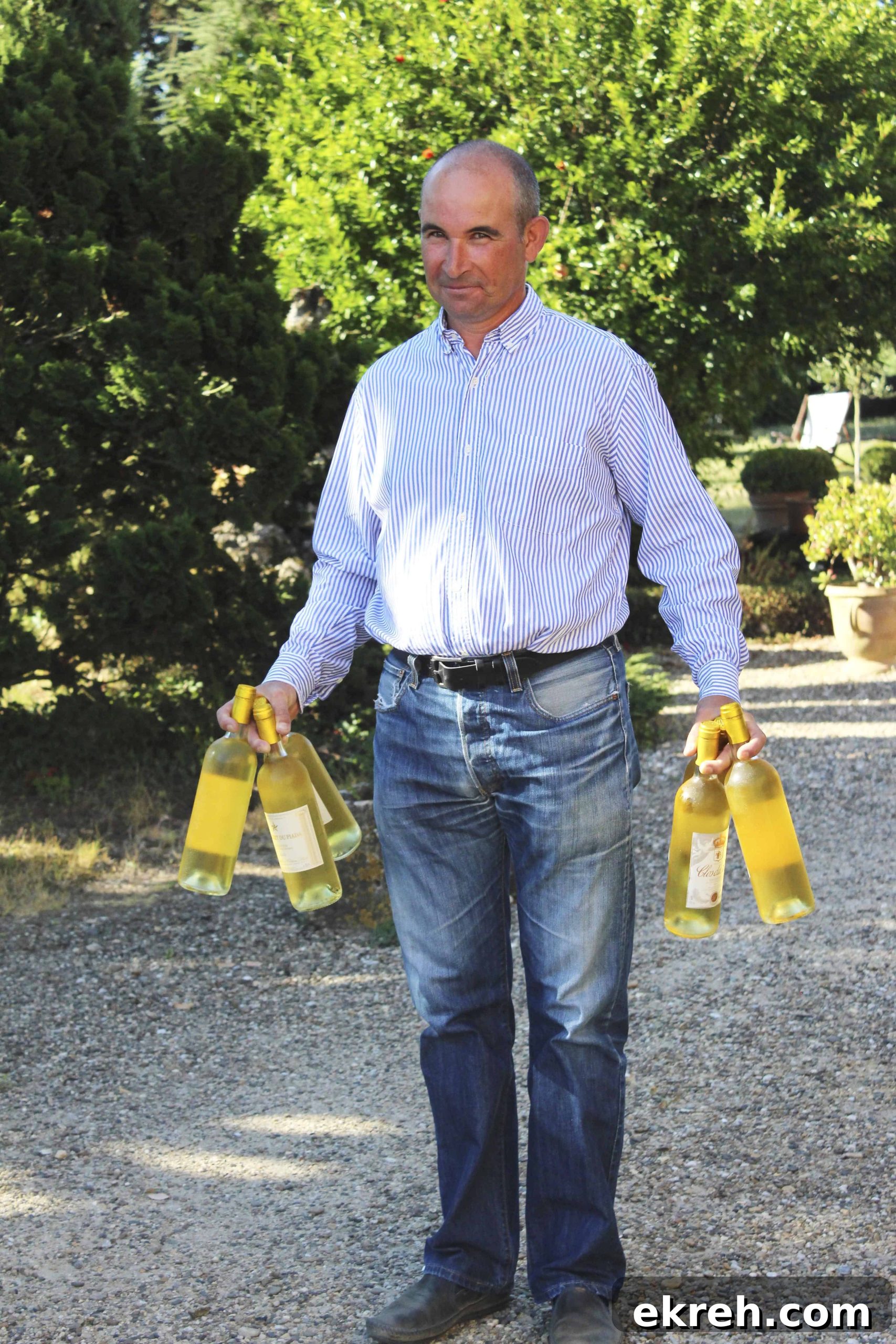 When Frédéric Lalande was a child he dreamed of becoming a fighter pilot, not a winemaker like his father and grandfather.
“When I was a child I used to watch the pilots from the vineyard. There was a training area not too far, the planes would get very close and dive down towards the vineyard, and then go back up. They flew so low (around 40 meters) that sometimes you could see the pilot’s head. I wanted to do that.”
Lalande initially trained as a parachutist but soon realized he didn’t have the eyesight or the legs required to become a fighter pilot. He returned to the family business and today runs Château Piada, an estate in Barsac, roughly 40 miles southeast of Bordeaux. Barsac is renowned for producing some of the world’s finest sweet wines from botrytized grapes.
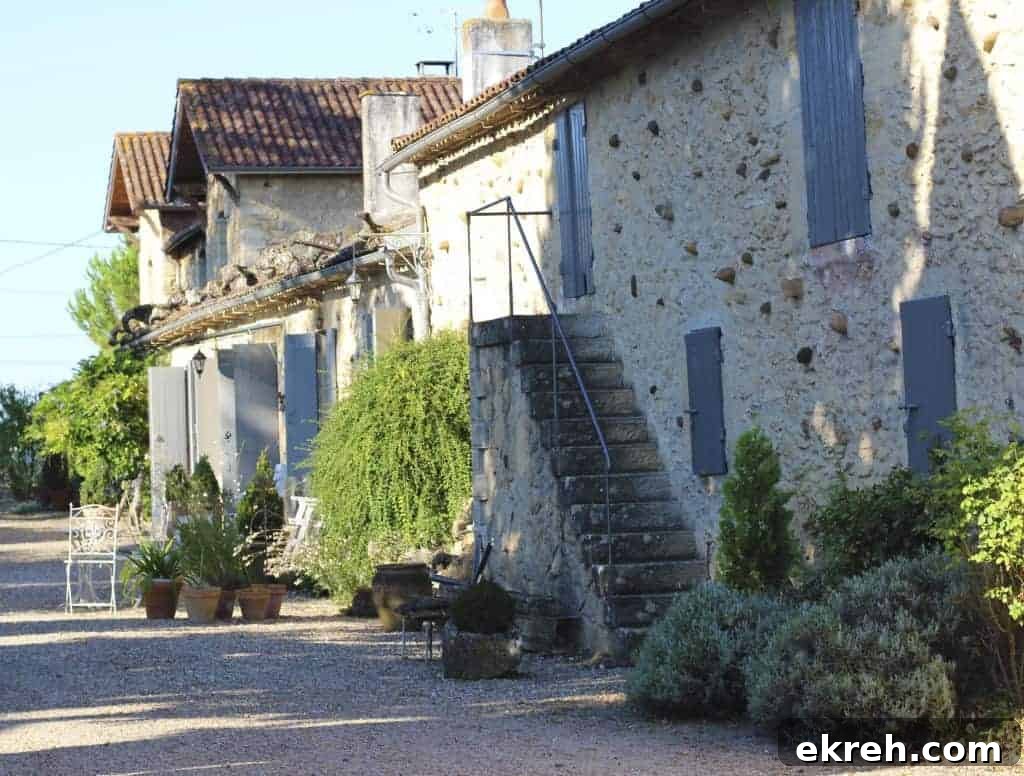
Frédéric took charge of the family property in 1999 and manages 8.22 hectares (about 20 acres) of AOC Barsac vineyards: 7.5 hectares of Sémillon, 0.5 hectare of Muscadelle, and 0.22 hectares of Sauvignon Blanc. He also owns a separate 7-hectare property for red wine production, but his Barsac holdings are where he crafts the estate’s celebrated sweet wines.
What is Botrytis?
Botrytis cinerea, commonly called noble rot, is a fungus that attacks grapes, causing them to shrivel and concentrate sugars and flavors. Under the right conditions, botrytized grapes yield intensely aromatic, richly textured sweet wines prized by collectors and gourmets alike.
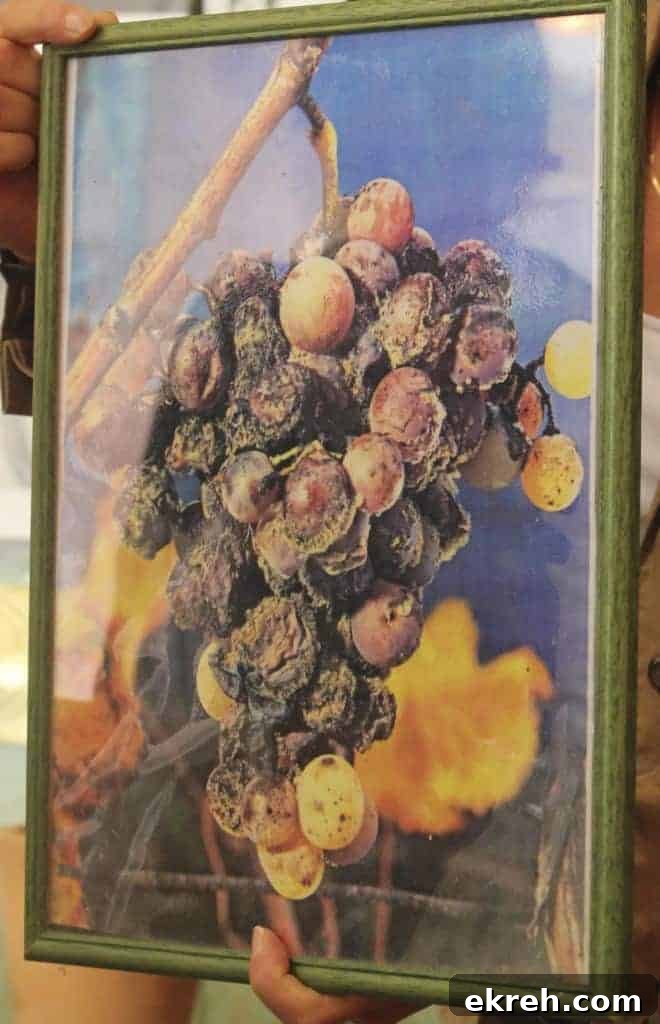
I visited in early September, before botrytis develops. The photo above shows the grapes before noble rot appears.
The Barsac microclimate is shaped by the nearby Ciron River, a notably cold watercourse, and the warmer Garonne River. The interplay of cool and warm air creates persistent fog and humidity in autumn, ideal conditions for botrytis to develop. Sémillon is the dominant grape here because it is especially susceptible to noble rot. Sauvignon Blanc adds acidity and freshness, while Muscadelle contributes aromatic lift. Although several Bordeaux appellations can produce botrytized sweet wines, Sauternes and Barsac are the most famous.
Careful, Hands-On Harvesting
Sweet wine production in Barsac is labor-intensive and precise. As Lalande explains, once botrytis appears—usually in late September—he makes his first selection, hand-picking individual botrytized berries rather than whole clusters. He repeats this selection multiple times, sometimes three or more passes, finishing in late October.
After each careful picking, the grapes are pressed immediately. Even if only a few small buckets are harvested, Lalande presses each lot without waiting for a larger quantity. This meticulous practice preserves the unique character of each selection and ensures high-quality juice for fermentation.
Yields for botrytized wines are extremely low. Where a typical Bordeaux vine might produce a bottle of wine, a vine affected by noble rot may yield as little as a single glass. Because of these small volumes and careful selection, these wines can command premium prices.
When botrytis is scarce or uneven, Lalande may blend some healthy, non-botrytized grapes for freshness. If no botrytized fruit develops but the healthy grapes remain in good condition, he may harvest and use them rather than risk poor-quality fruit. If fruit quality does not meet the estate’s standards, Lalande will sell it off in bulk instead of releasing a vintage under the Château Piada name. There have been years when no Château Piada was produced because the estate rejected the fruit.
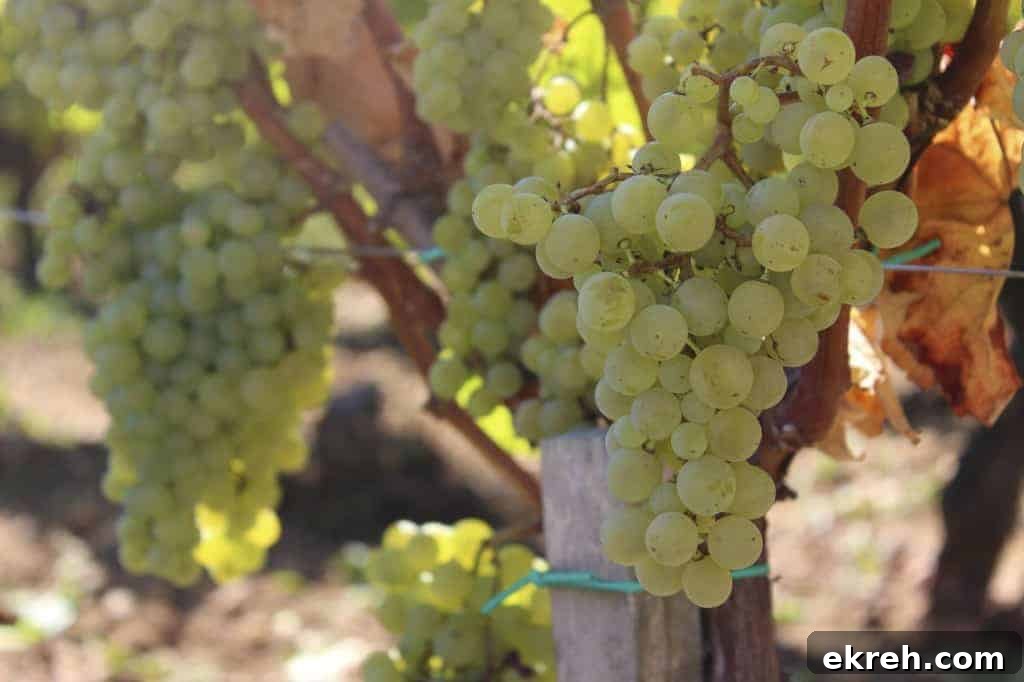
Sémillon grapes before botrytis
Tasting the Estate’s Wines
During a visit I tasted five wines from Château Piada: the flagship Château Piada (2010 and 2011), the second label “Clos du Roy” (2010 and 2011), and the 2010 Le Hauret du Piada, Cérons AOC. All showed notable complexity. The 2010 Château Piada stood out with floral, peach, and citrus aromatics, a honeyed texture and bright acidity. It was an excellent example of Barsac’s balance of richness and freshness.
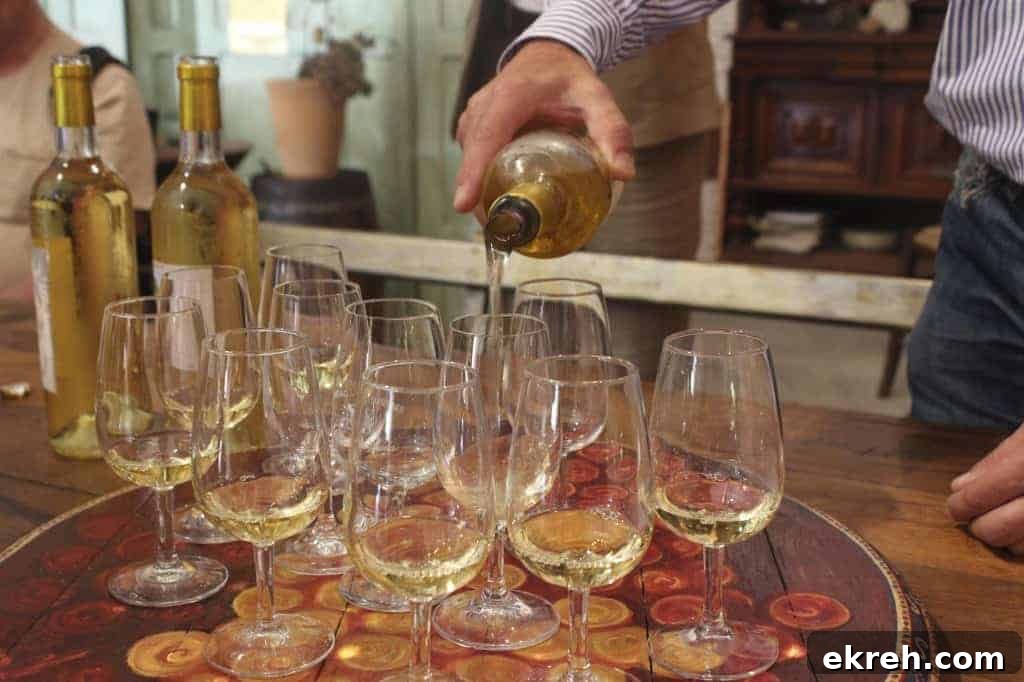
The wines from this estate are distinctive and expressive, and when the weather cooperates and the selection is strict, the results can be unforgettable.
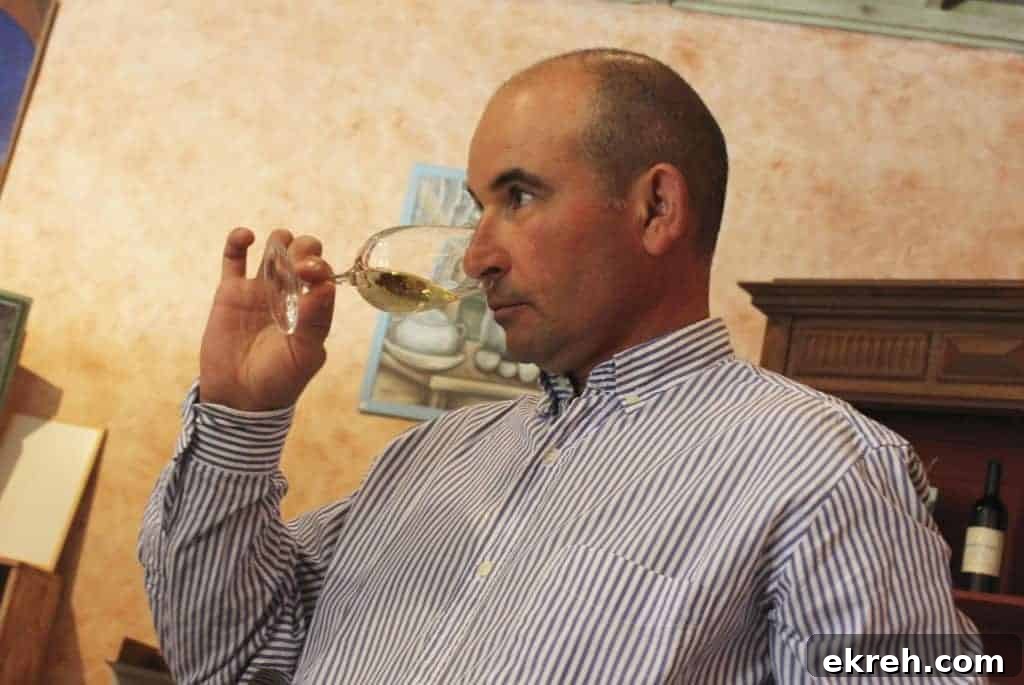
A Family Tradition
Although Lalande initially resisted a life in wine, he has embraced his role with evident passion. The work has its highs and lows: in 2011 a warehouse fire destroyed much of the estate’s library stock, including the entire 2009 vintage, though insurance mitigated the loss. What sustains him are the moments when he knows a vintage will produce truly great wine.
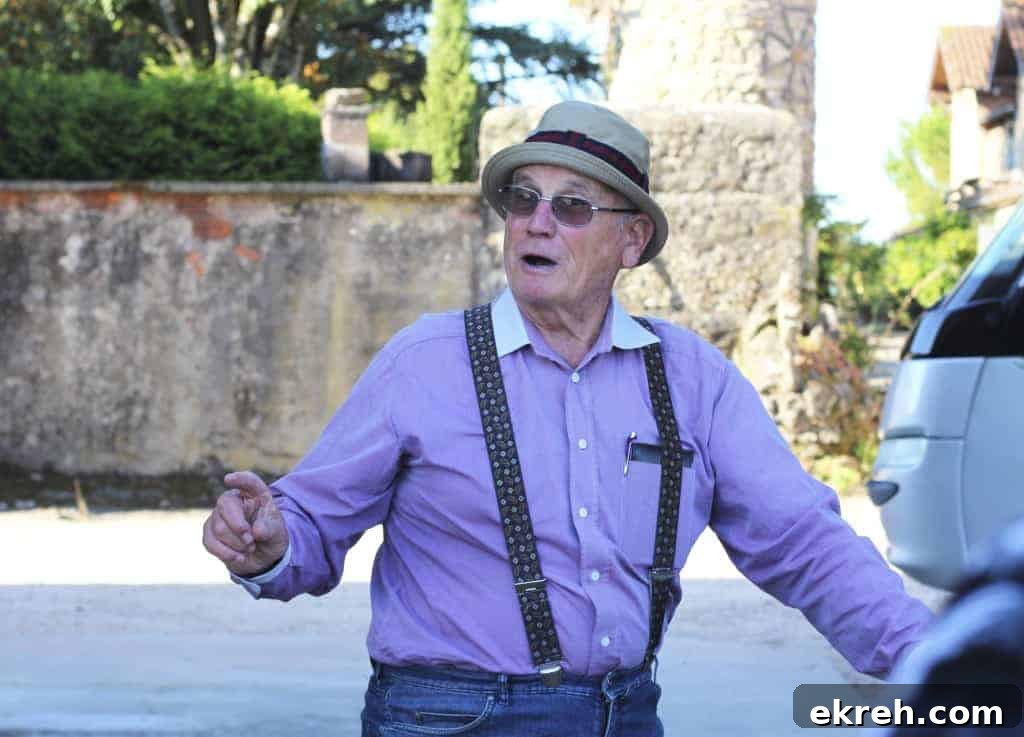
During the visit I met Lalande’s father, Jean, a lively character who arrived by bicycle wearing red slippers. A former winemaker and avid cyclist, Jean still rides locally and offered a wry piece of advice: “The secret of youth is riding your bike, and drinking Barsac.”
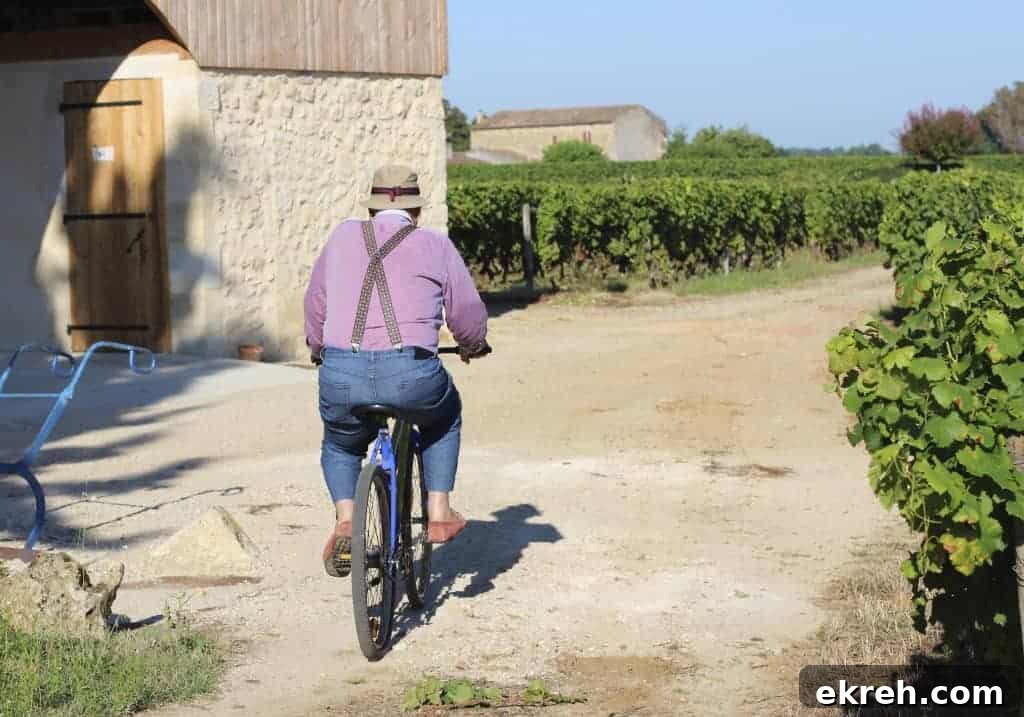
If you have the opportunity to taste wines from Barsac or Sauternes—especially bottles from Château Piada—you’ll discover wines that reward patience and careful craft. Their allure stems from precise vineyard work, selective harvesting, and a unique microclimate that allows botrytis to transform healthy grapes into richly aromatic, complex sweet wines.
All direct quotes were translated by our host Maxine Colas, who coordinated the visit and tour arrangements in Bordeaux.
*****
A short video featuring Frédéric Lalande and Château Piada captures the care taken in selecting botrytized grapes and conveys some of the winemaker’s passion; a search for Château Piada videos online will reveal brief clips of the harvest and vineyard work.