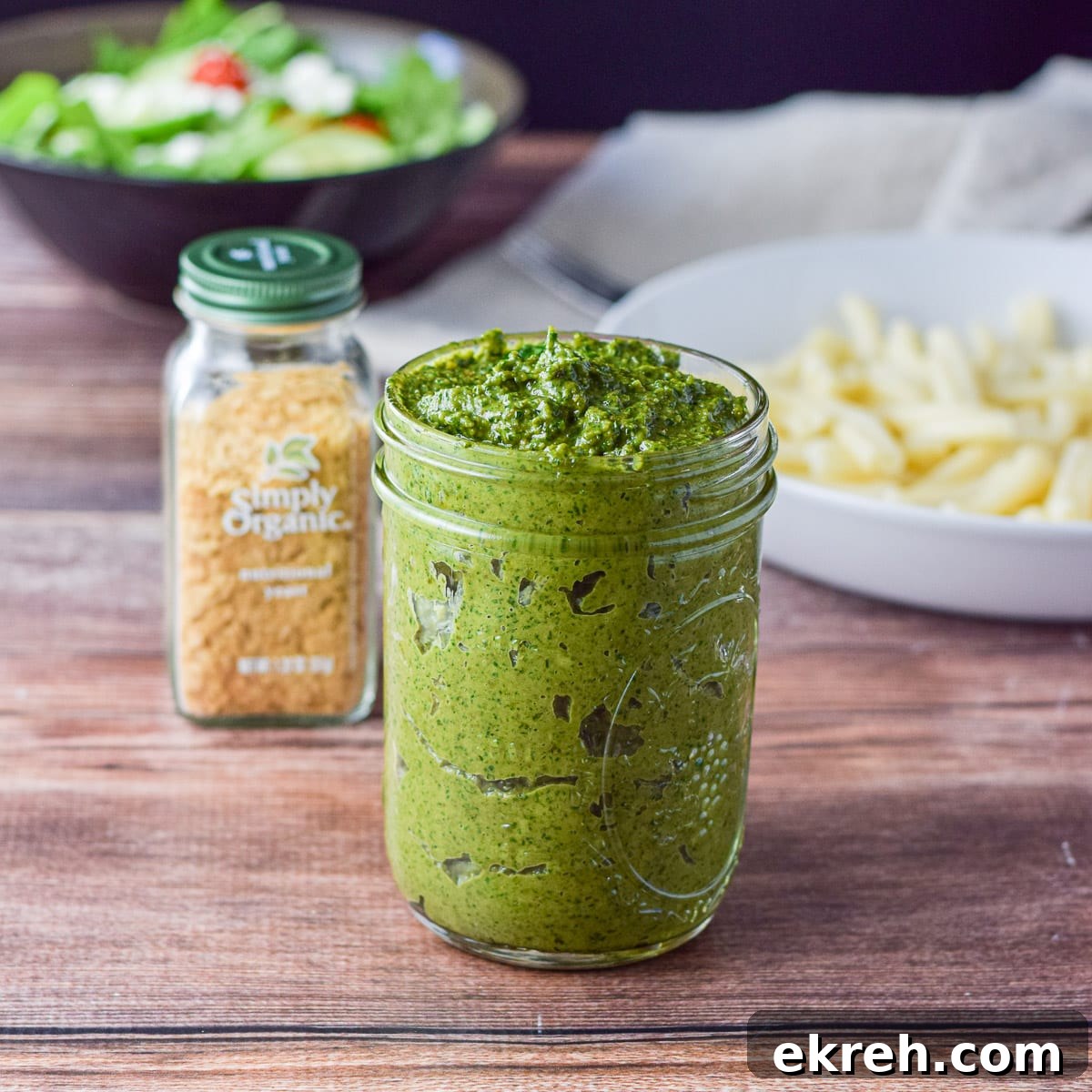
This vegan pesto sauce is full of bright, savory flavor and makes a guilt-free addition to family meals. By swapping cheese for nutritional yeast, it delivers a rich, cheesy note without dairy—perfect for lactose-intolerant guests or anyone following a plant-based diet.
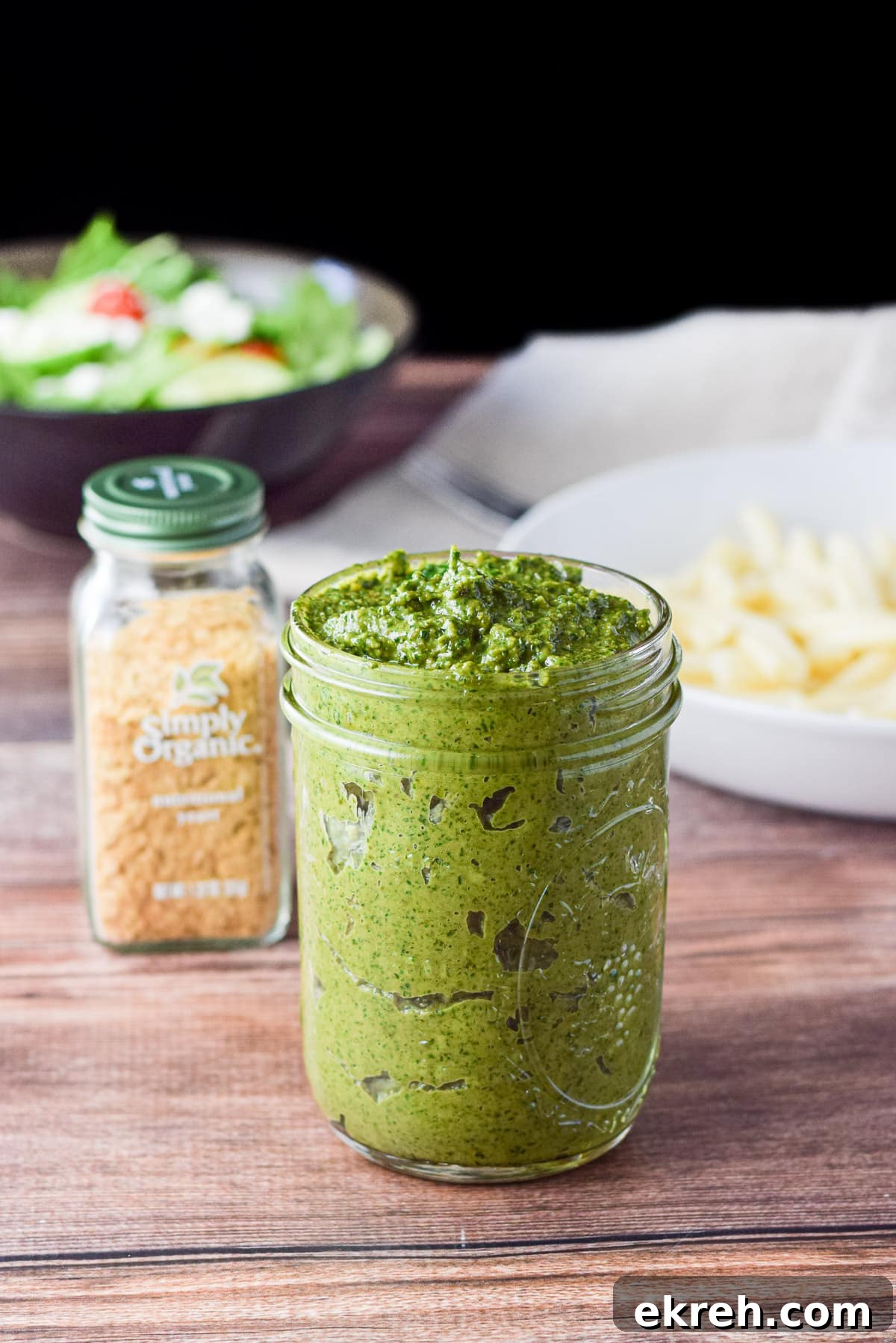
I spent nearly a decade experimenting with vegetarian and vegan eating. Over time I found myself craving meat again, which prompted a change in my diet. Even after reintroducing animal protein, I kept using nutritional yeast because I love its savory, almost cheesy flavor—it’s especially delicious in soups, sauces, and dressings.
Nutritional yeast and its uses
Nutritional yeast is a deactivated yeast that brings a nutty, cheesy flavor without dairy. It can be intense—earthy and tangy—depending on the brand, so taste as you go. That umami character makes it an excellent stand-in for grated cheese in sauces, pesto, and sprinkled over popcorn, roasted vegetables, or salads.
Helpful tips
- When substituting nutritional yeast for cheese, start with a small amount and increase to taste—its flavor can be strong.
- Traditional pesto uses basil, but you can vary the greens: parsley, spinach, kale, or arugula all work well and change the flavor profile.
- Instead of pine nuts, try pistachios, walnuts, almonds, cashews, or sunflower seeds—use what you have or what’s most affordable.
- Adjust the oil to control texture. Use less oil for a thicker spread and add more if you prefer a looser sauce for tossing with pasta.
- Fresh herbs and a good extra virgin olive oil make a noticeable difference in flavor.
- Store pesto in an airtight container in the refrigerator for up to a week. For longer storage, freeze portions in ice cube trays or a jar for up to two months.
- A squeeze of lemon brightens the sauce and helps preserve its green color. Add lemon to taste.
- Raw garlic is potent—start small and increase if needed. Garlic paste from a tube is convenient and consistent in strength.
- If your nuts are salted, reduce the added salt so the pesto doesn’t become overly salty.
- Customize with mix-ins like sun-dried tomatoes, roasted red peppers, or a pinch of chili flakes for extra depth.
How to make vegan pesto sauce
Pre-step
Gather a food processor (or high-powered blender) and a rubber spatula.
Step one
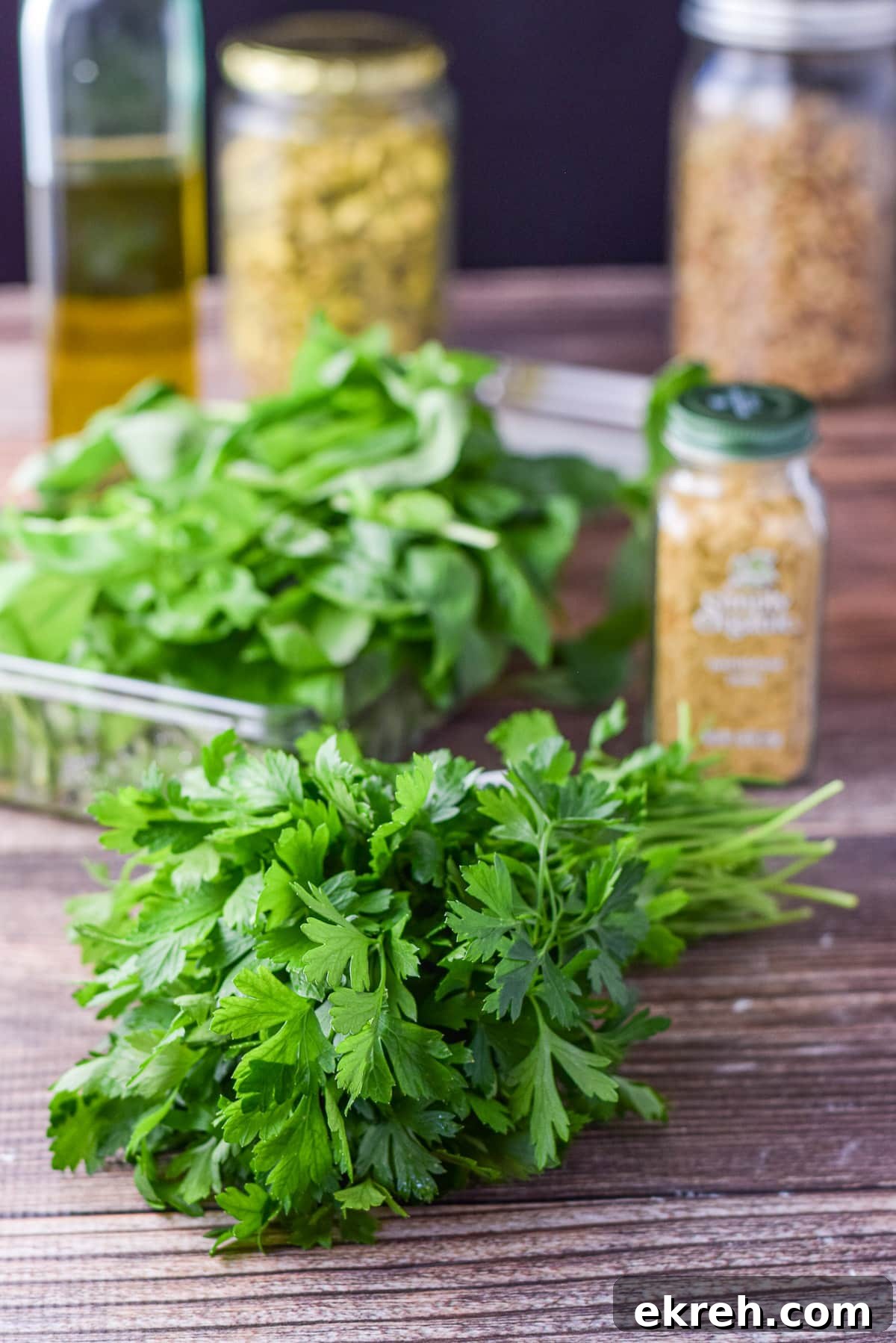
Prepare your ingredients: fresh basil leaves, fresh parsley, pistachios, walnuts, nutritional yeast, olive oil, lemon juice, garlic (or garlic paste), and salt.
Step two
Strip the herb stems from the basil and parsley and add the leaves to the processor.
Step three
Add lemon juice, garlic, salt, pistachios, chopped walnuts, and half the olive oil to the processor.
Step four
Measure and add the nutritional yeast to the mix.
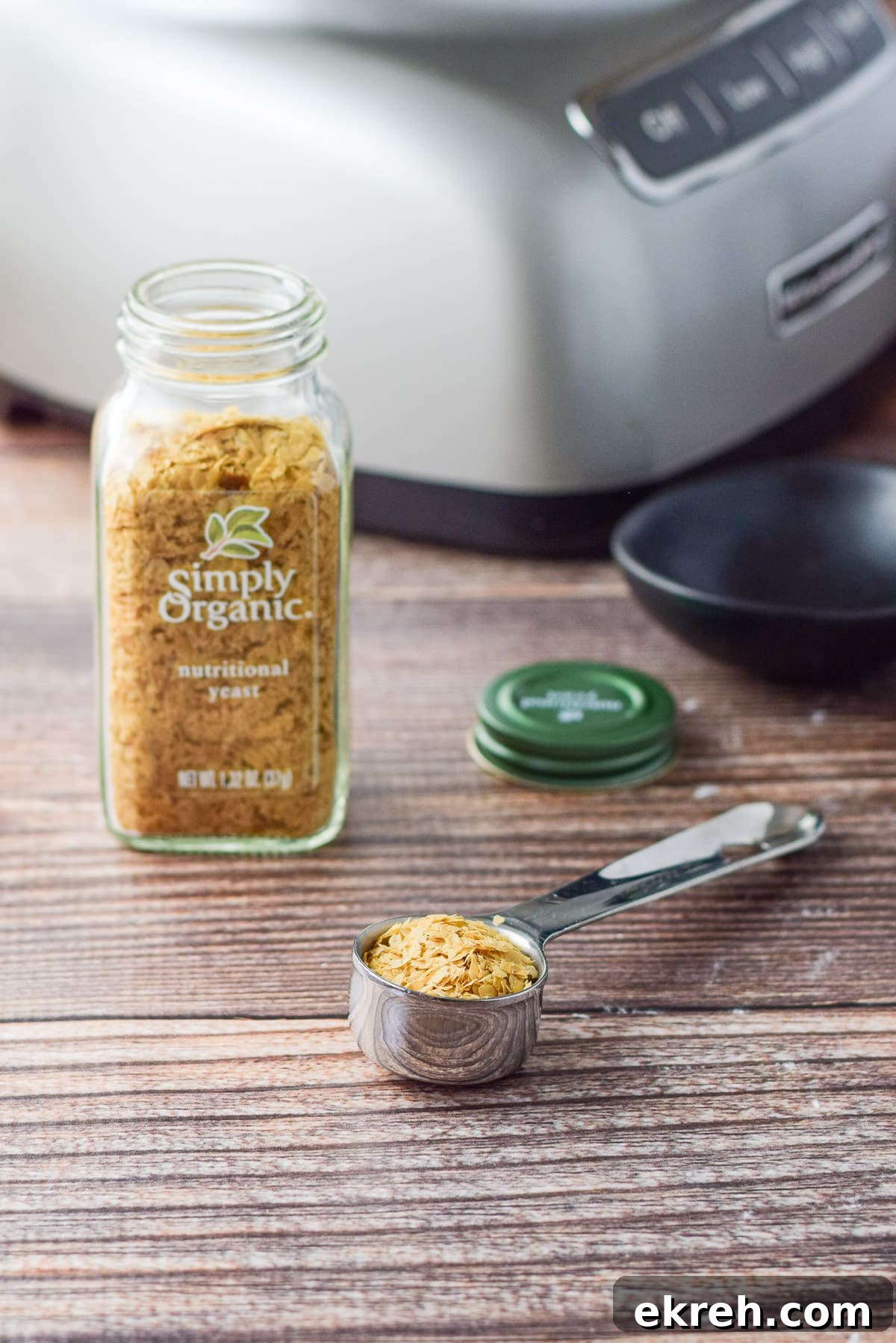
Step five
Secure the lid and process on high for about one minute. Scrape the sides with a spatula, then process for another minute until you reach a smooth, spoonable consistency.
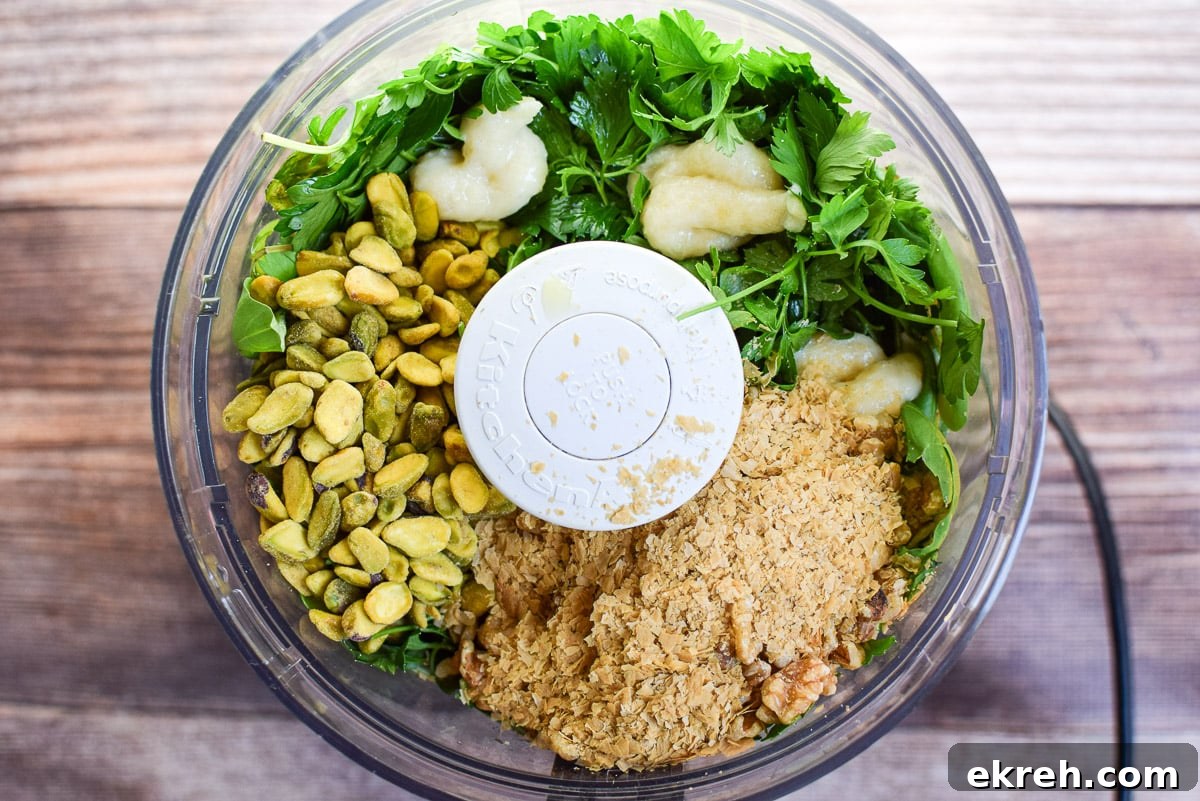
Step six
If needed, slowly stream in the remaining olive oil until you reach your preferred texture. Transfer the pesto to a jar for storage or use immediately.
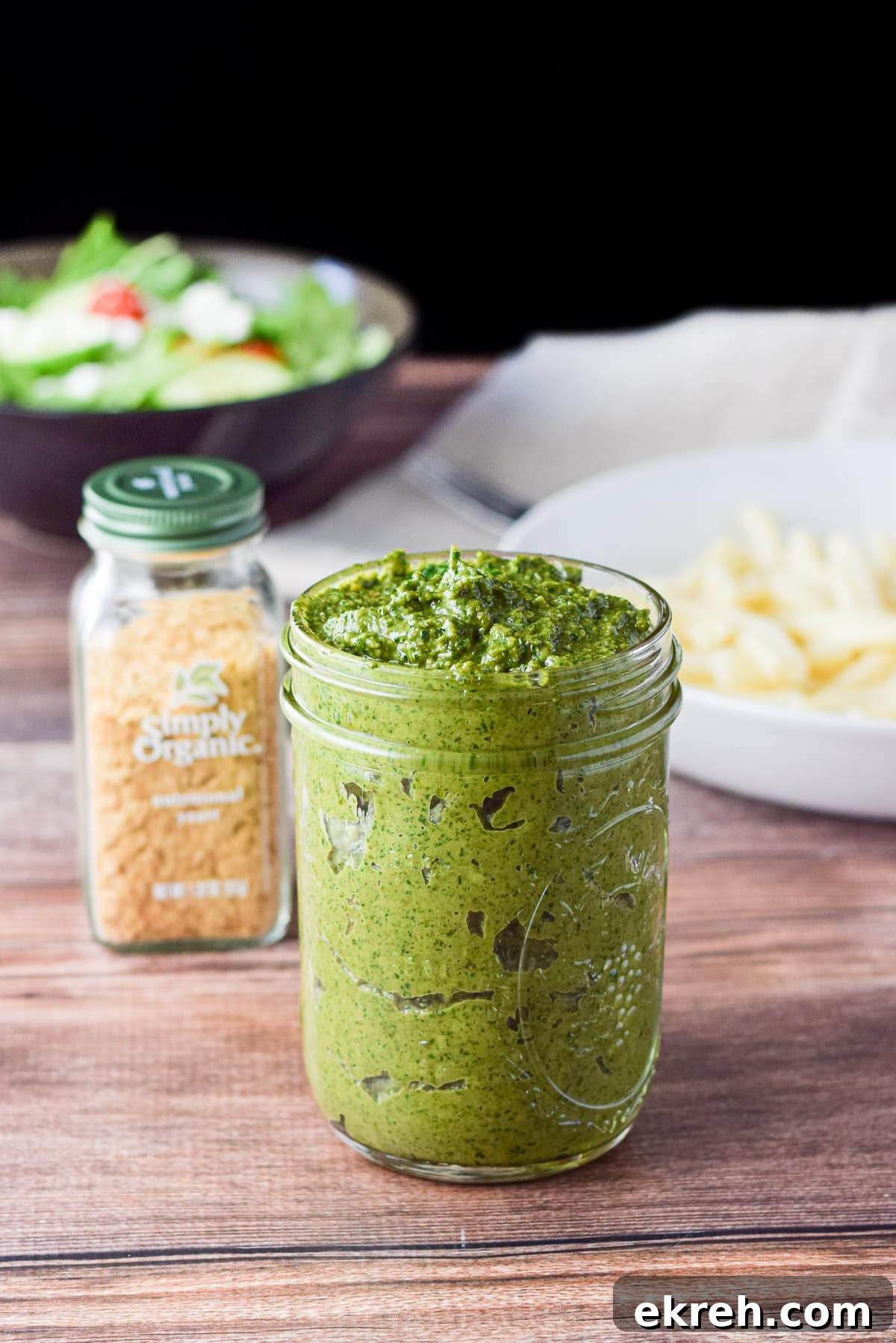
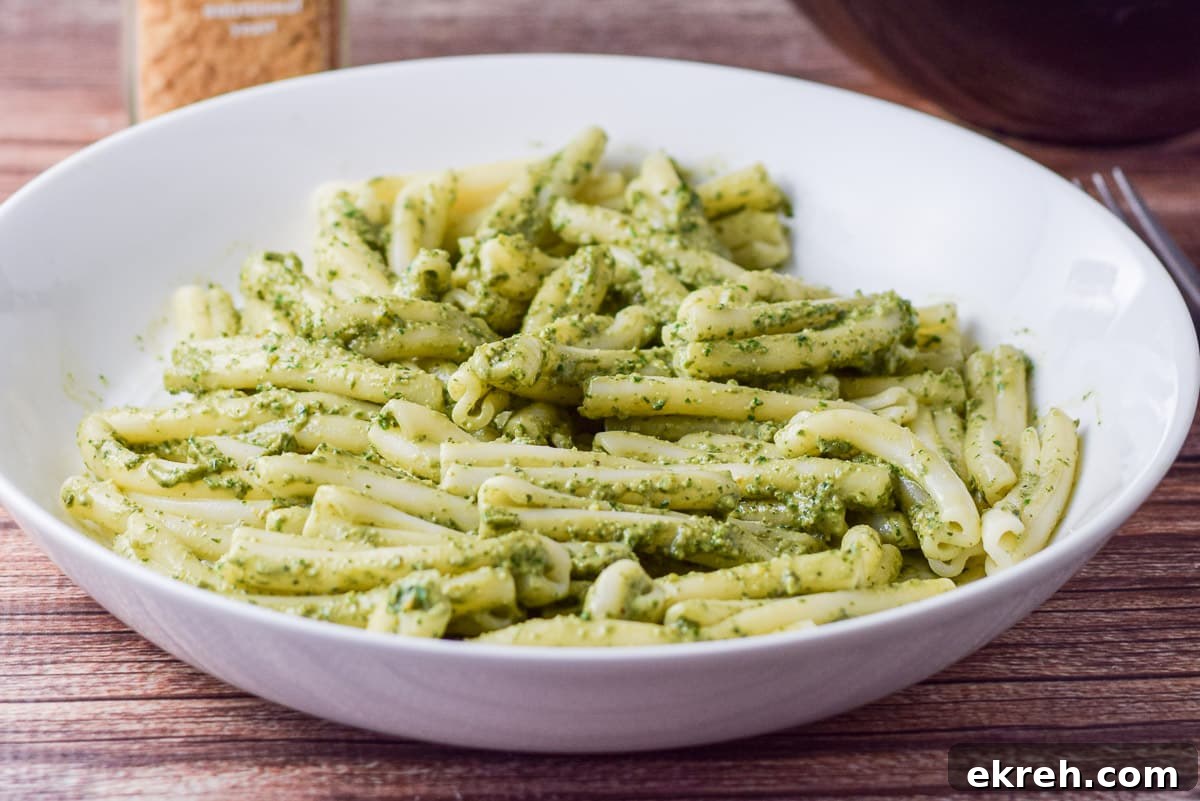
Spoon a few tablespoons onto freshly cooked pasta and toss to coat. The sauce also works beautifully as a sandwich spread, a salad dressing base, or simply as a flavorful dip.
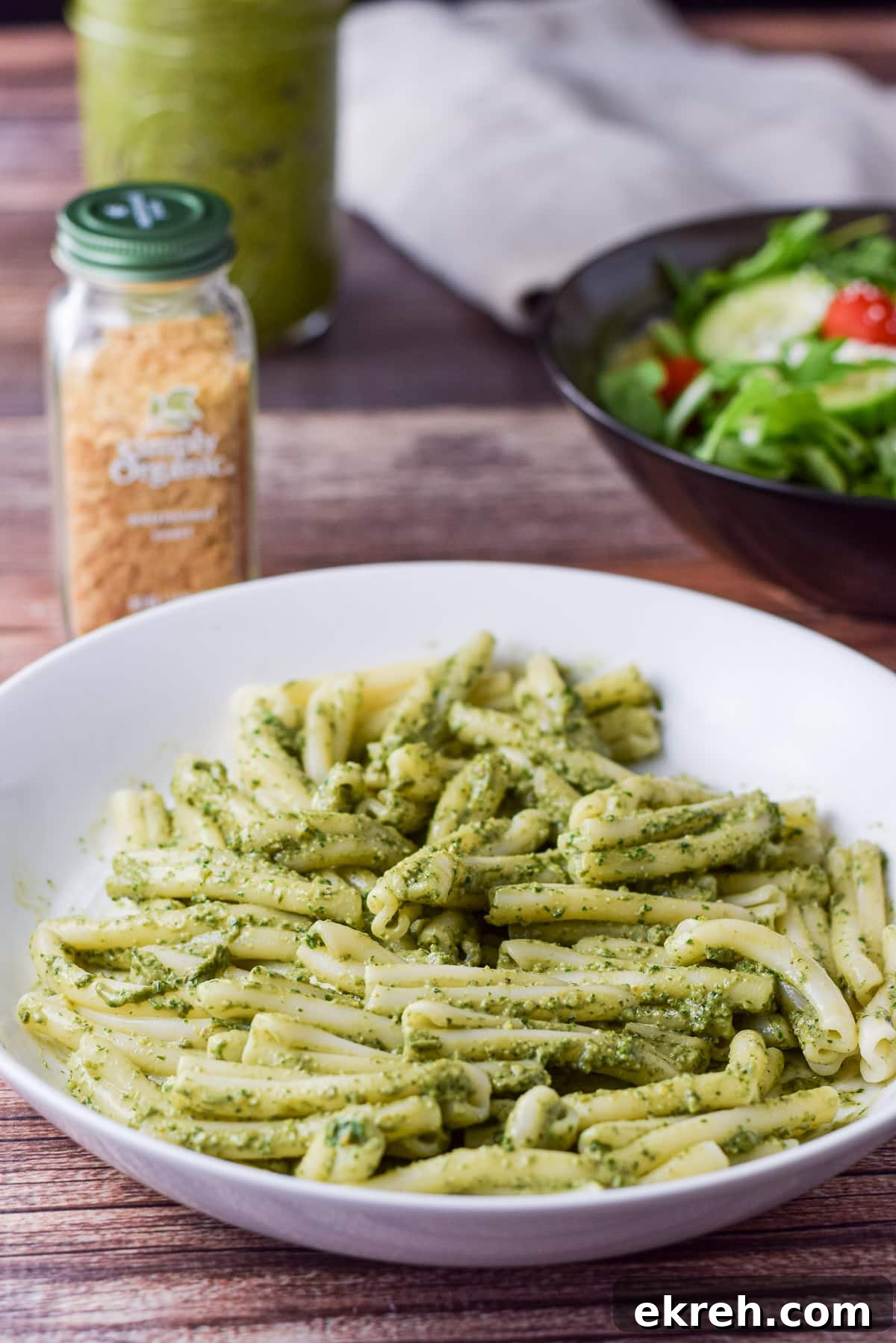
My family loves this pesto—it’s quick to make and incredibly versatile. Enjoy it warm on pasta, swirled into soup, or chilled on crusty bread.
Other sauce recipes
- Sour cream sauce
- Enchilada sauce
- Chunky grass-fed ground beef gravy
- Chimichurri sauce
- Vodka pasta sauce
If you try this vegan pesto, I’d love to hear how you used it. Leave a note describing your favorite variations and serving ideas.
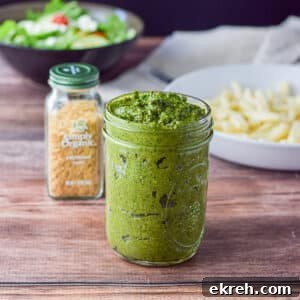
Versatile Vegan Pesto Sauce
This versatile vegan pesto has a bright, savory flavor thanks to nutritional yeast. It’s great on pasta, sandwiches, salads, or as a dip.
Rating: 4.67 from 6 votes
Prep Time: 10 minutes | Total Time: 10 minutes
Servings: 16 tablespoons
Calories: 176 kcal per 2-tablespoon serving
Ingredients
- 4 ounces fresh basil leaves (about 4 cups, stems removed)
- 2 cups fresh parsley, packed (stalks removed)
- 1/2 cup raw, unsalted pistachios
- 1/2 cup raw, unsalted walnuts, chopped
- 1 ounce lemon juice (about 1/2 lemon)
- 1/2 teaspoon salt, or to taste
- 1 cup extra virgin olive oil, divided
- 3 tablespoons nutritional yeast
- 2 teaspoons garlic paste (or 2 cloves garlic)
Instructions
- Add basil and parsley leaves to the food processor.
- Add pistachios, walnuts, lemon juice, salt, nutritional yeast, garlic paste, and half the olive oil.
- Process until the mixture becomes a coarse, combined paste.
- With the processor running, slowly pour in the remaining oil until you reach the desired consistency.
- Scrape down the sides as needed and process an additional minute for a smooth result.
- Transfer to a jar and store in the refrigerator, or use immediately tossed with hot pasta.
Equipment
- Food processor or high-speed blender
- Rubber spatula
Notes
The pesto will be spoonable; add more olive oil if you prefer a looser sauce. Freeze in portions for long-term storage. Nutrition estimates are approximate and will vary with exact ingredients used.
Storage
Refrigerate in an airtight container up to one week. For longer storage, freeze in ice cube trays or a jar for up to two months.
Nutrition (per 2 tbsp)
Calories: 176 kcal | Carbohydrates: 3 g | Protein: 3 g | Fat: 18 g | Sodium: 78 mg | Fiber: 1 g