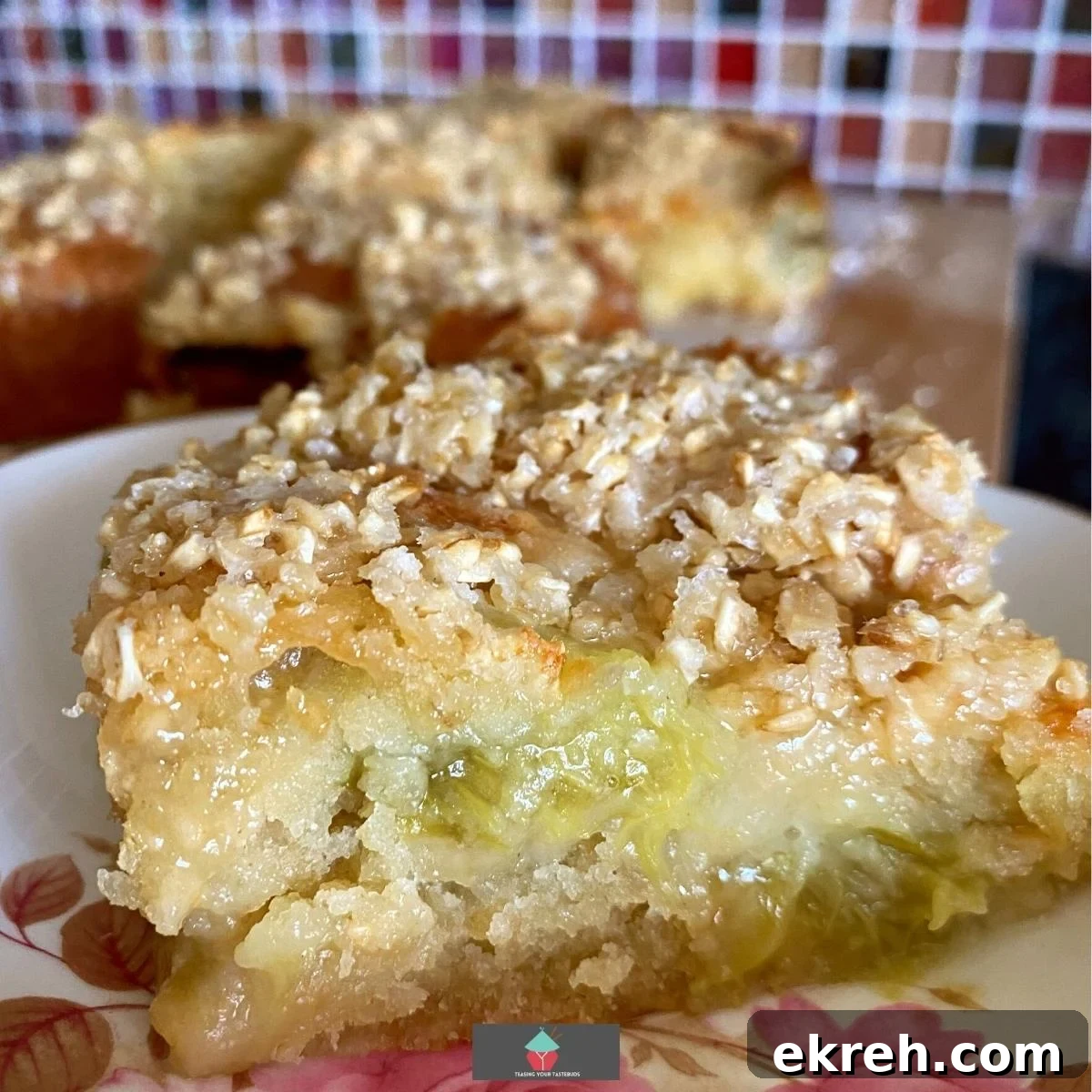
Just like grandma used to make, this old-fashioned Lazy Daisy Rhubarb Oatmeal Cake is a comforting, gooey dessert that’s especially delicious served warm. Its soft, moist crumb comes from oats soaked in hot milk, while tart rhubarb adds a pleasant contrast to the sweet cake and the caramel-like oat topping. This vintage recipe is simple to prepare and perfect for family gatherings or potlucks.
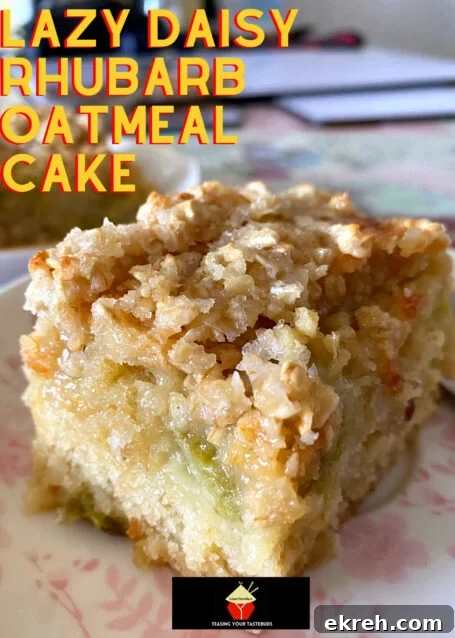
Lazy Daisy cakes date back to the 1940s and are known for their straightforward method and comforting flavors. This version keeps the traditional base—oats soaked in boiling milk—then folds in rhubarb for a slightly tangy touch. You can substitute other fruits like strawberries or blueberries if you prefer, but we recommend keeping the same fruit quantity to preserve the cake’s texture and moisture.
What’s inside the cake?
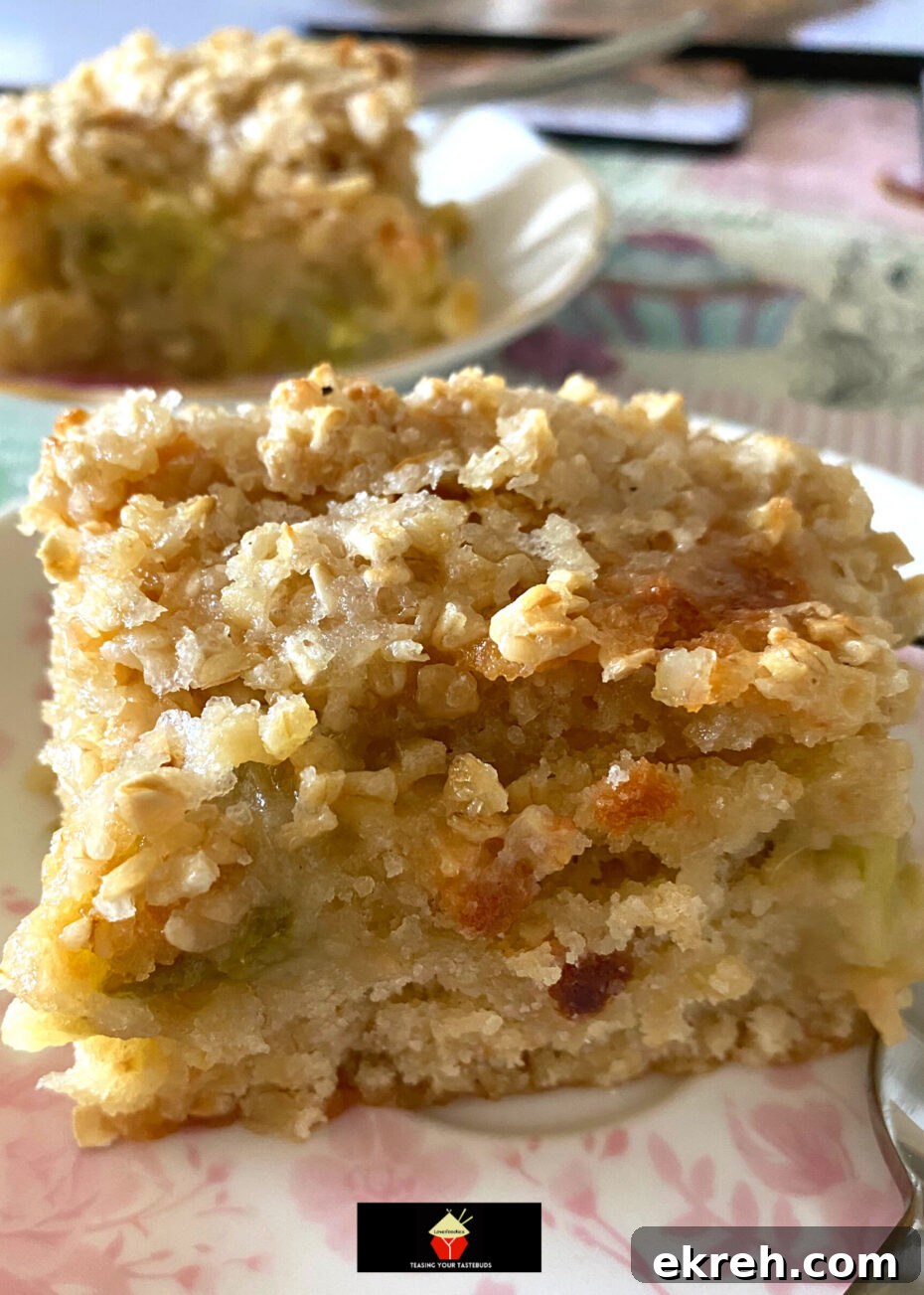
The cake batter combines oats soaked in boiling milk, butter, sugar, vanilla, flour, baking powder, salt, and a beaten egg. Once mixed, folded rhubarb pieces are added to distribute bursts of tartness throughout the cake. The oats keep the crumb soft and moist, giving the cake a tender, slightly rustic texture.
What is the topping made from?
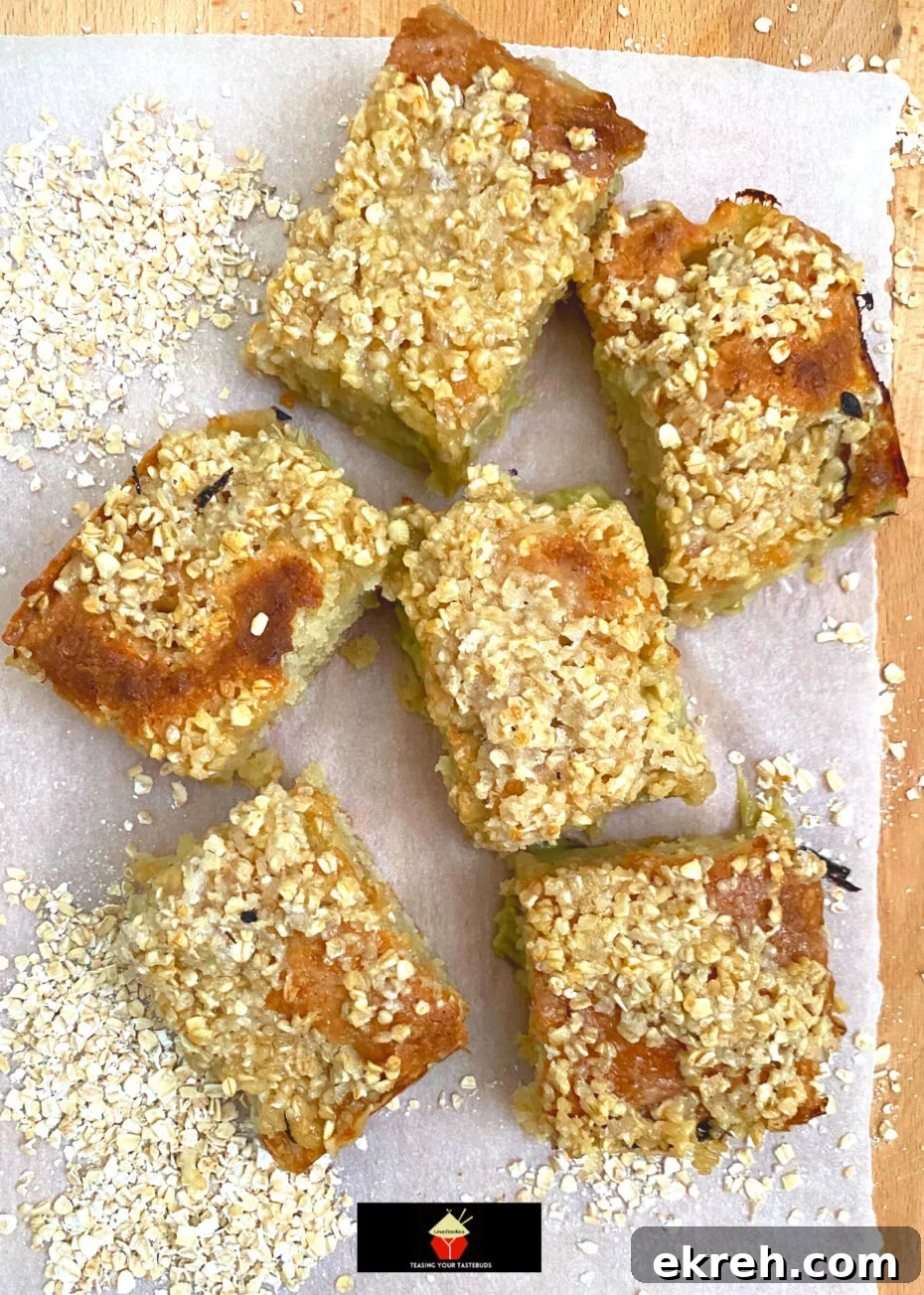
The topping is a simple oat-based mixture of oats, sugar, milk and butter. It is similar to a streusel but a bit stickier and chewier. Traditionally, the topping is added after the cake finishes baking and then placed under a hot broiler for a short time. The heat makes the sugar bubble and caramelize slightly while the oat clusters crisp around the edges, producing a delightful contrast to the soft cake beneath.
How to make Lazy Daisy Rhubarb Oatmeal Cake
This old-fashioned cake is easy to prepare with just a bowl and a spoon, though an electric mixer can speed things up. The method is straightforward: soak the oats, combine the wet and dry ingredients, fold in rhubarb, bake, then add the oat topping and broil briefly until bubbly and golden. Allow the cake to rest before slicing so it sets and holds together well.
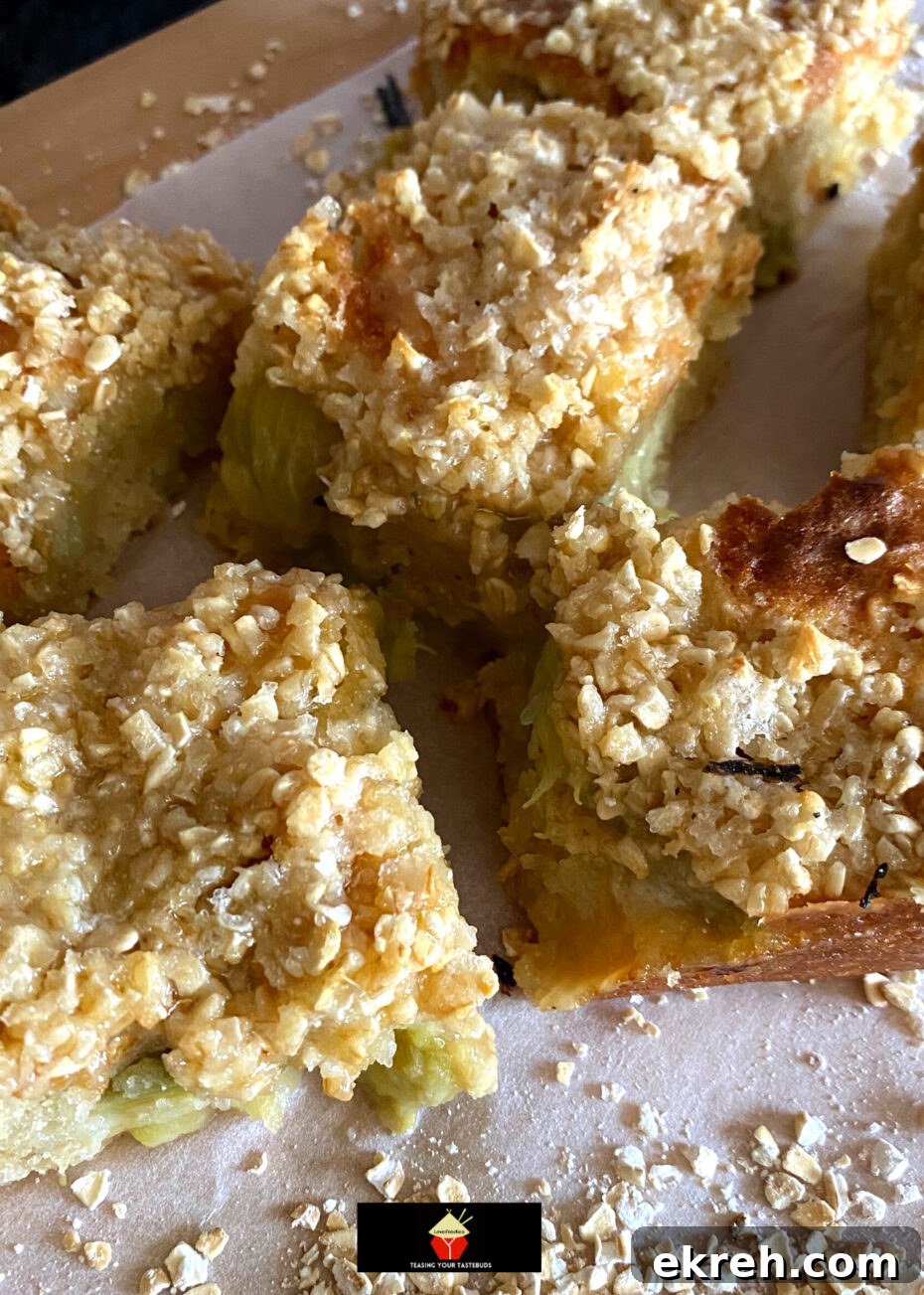
Serve slices warm or at room temperature. This cake pairs beautifully with custard, whipped cream, or a scoop of vanilla ice cream. Store any leftovers in an airtight container; they will keep well for three to four days.
Prep Time
10 Minutes
Cook Time
55 – 60 Minutes
Serves
12
Ingredients you’ll need
The Cake
1 & 1/4 cups (300 ml) boiling milk
1 cup (155 g) quick or old-fashioned oats
5 tablespoons butter, softened
1 & 1/2 cups (300 g) sugar
1 teaspoon vanilla extract
1 & 3/4 cups (220 g) all-purpose flour
1 teaspoon baking powder
1/4 teaspoon salt
1 egg, beaten
14 oz (400 g) rhubarb, cut into 1-inch pieces
The Topping
1/2 cup (100 g) regular sugar
1/2 cup (80 g) quick or old-fashioned oats
3 tablespoons milk
2 tablespoons butter, cubed
Instructions
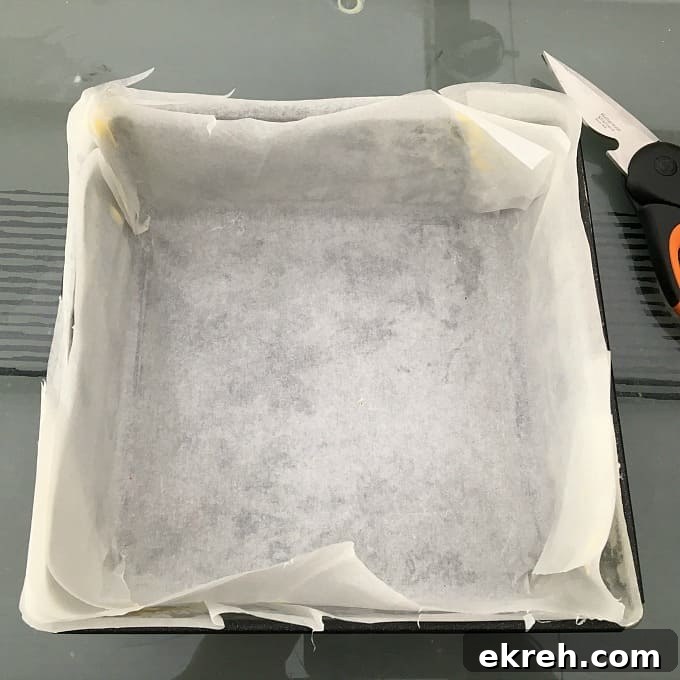
1. Preheat the oven to 350°F (170°C). Grease and line an 8-inch square baking pan with parchment paper.
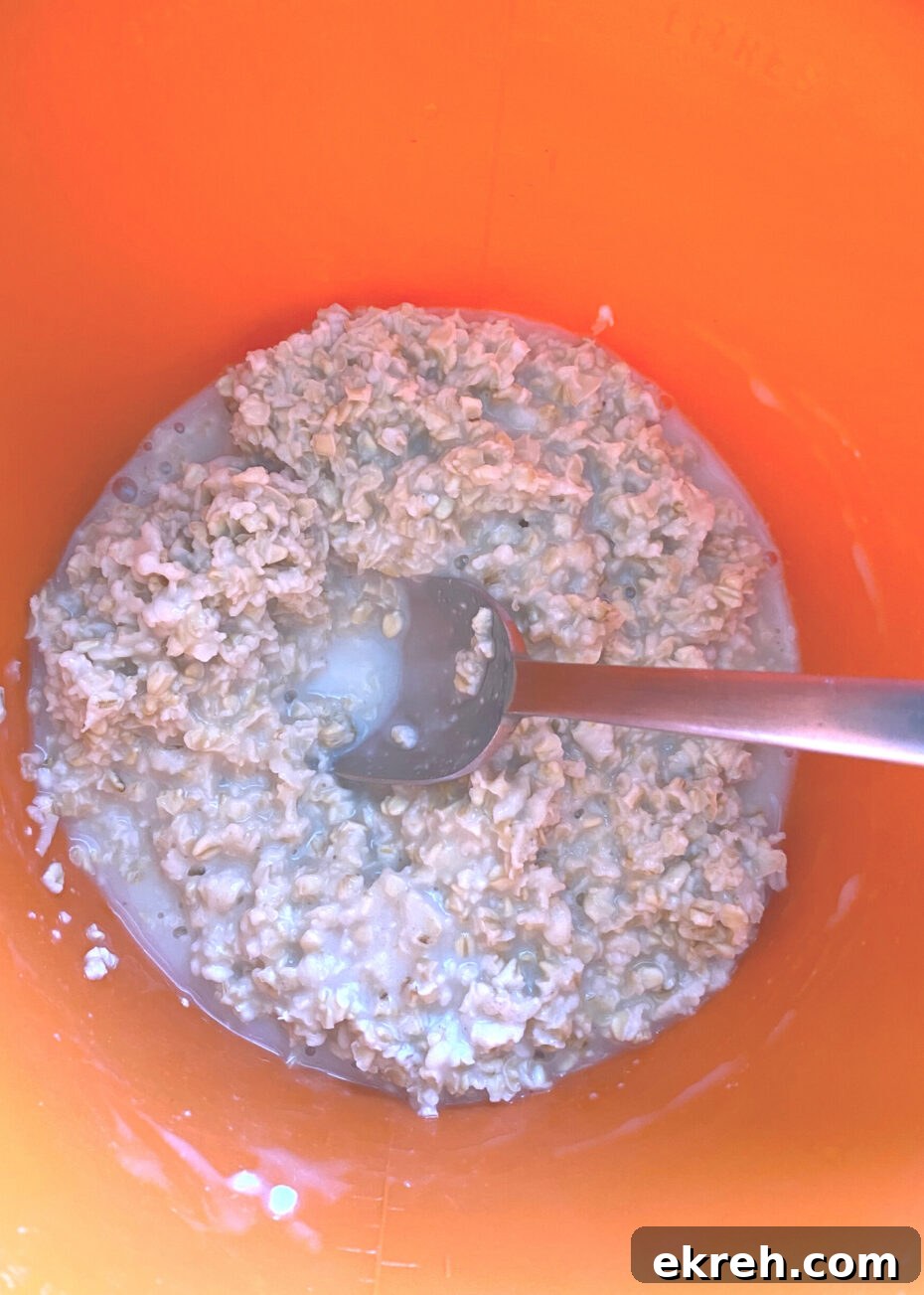
2. Pour the boiling milk over the oats in a medium bowl and stir to combine. Let the oats soften for a few minutes.
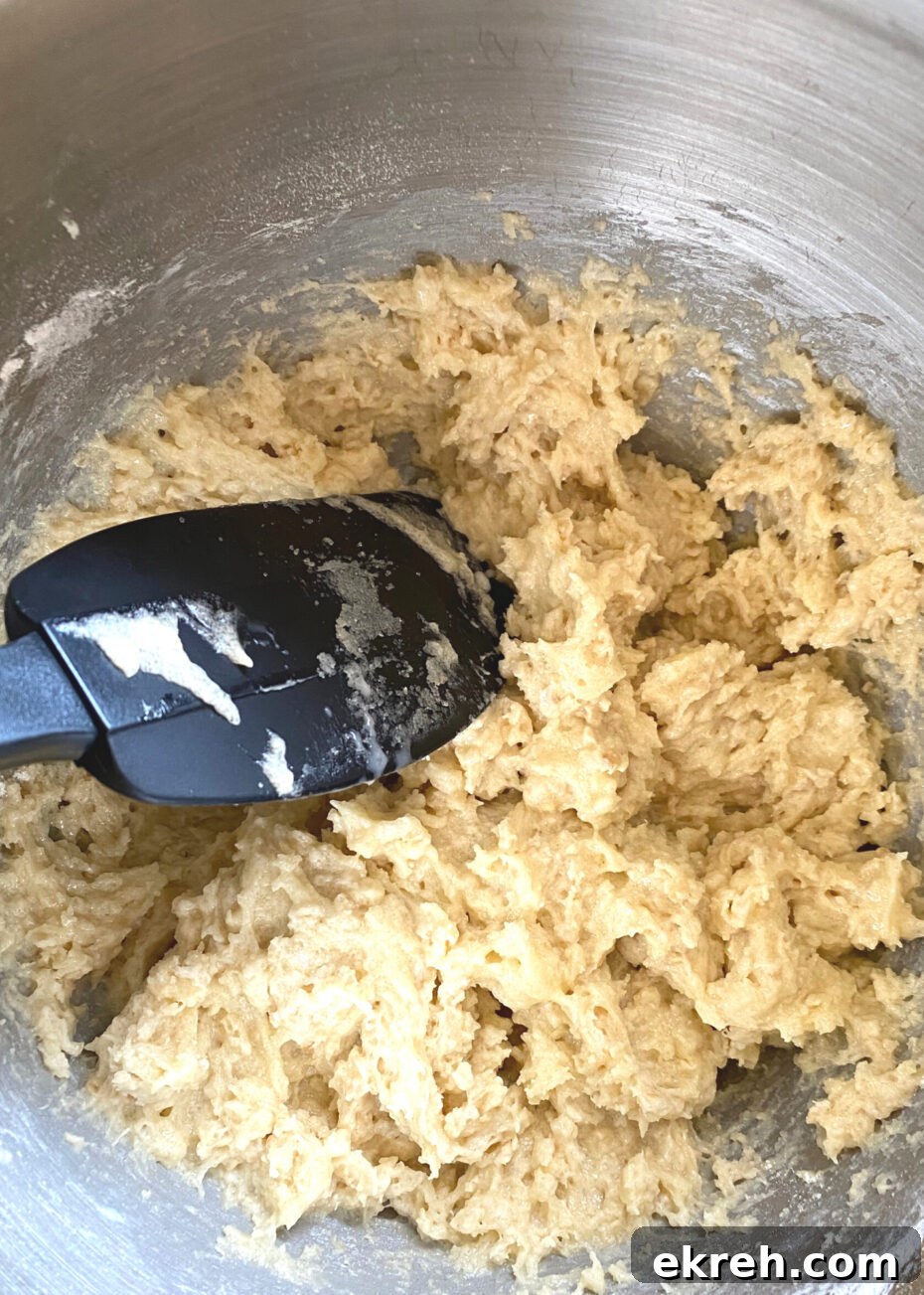
3. In a large bowl, beat the butter and sugar until well blended. Add the beaten egg and vanilla and mix until incorporated.
4. Add the oat-and-milk mixture, flour, baking powder, and salt. Stir until combined, then fold in the rhubarb pieces so they are evenly distributed.
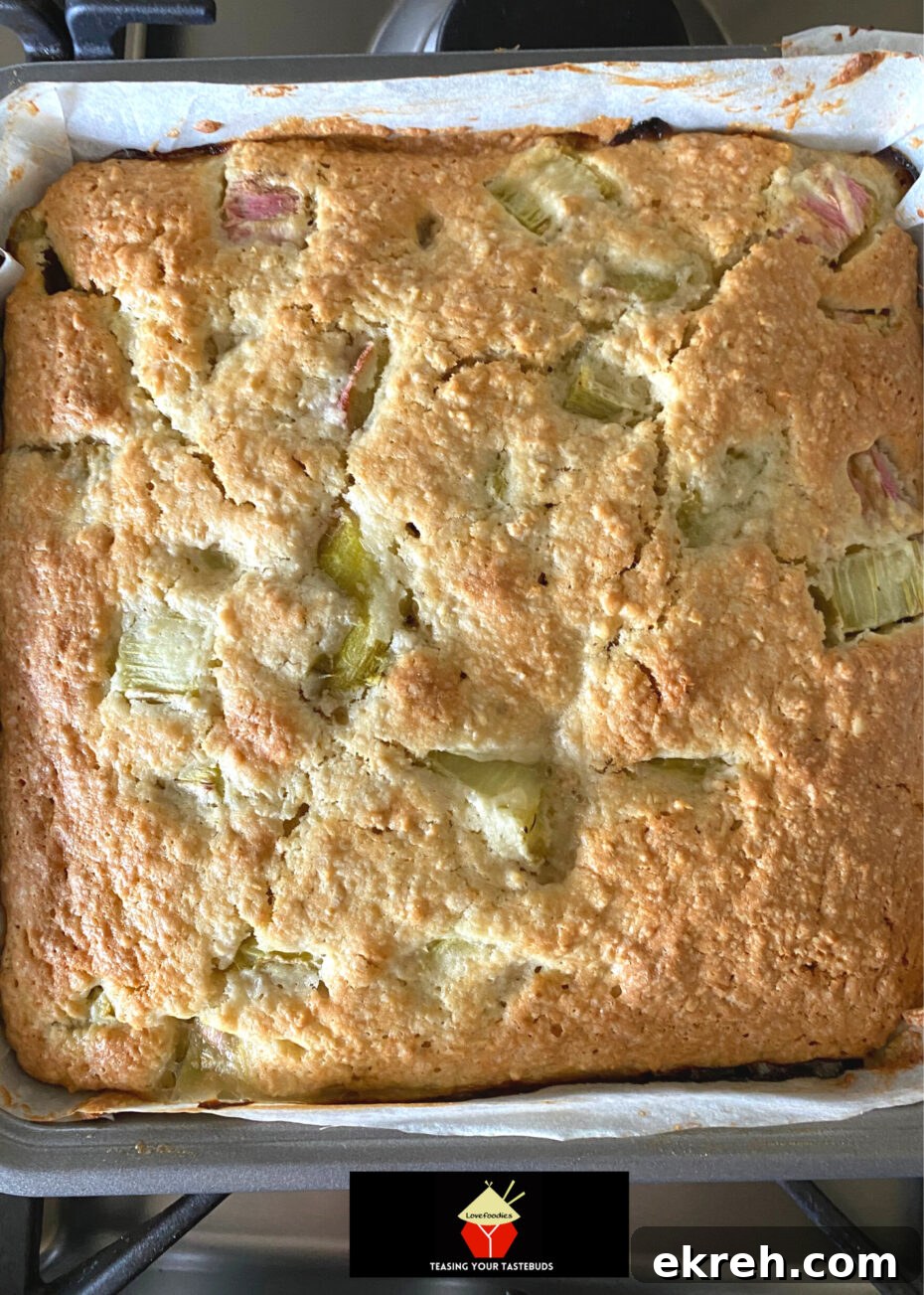
5. Transfer the batter to the prepared pan and smooth the top. Bake for 55 to 60 minutes, or until a toothpick inserted in the center comes out clean.
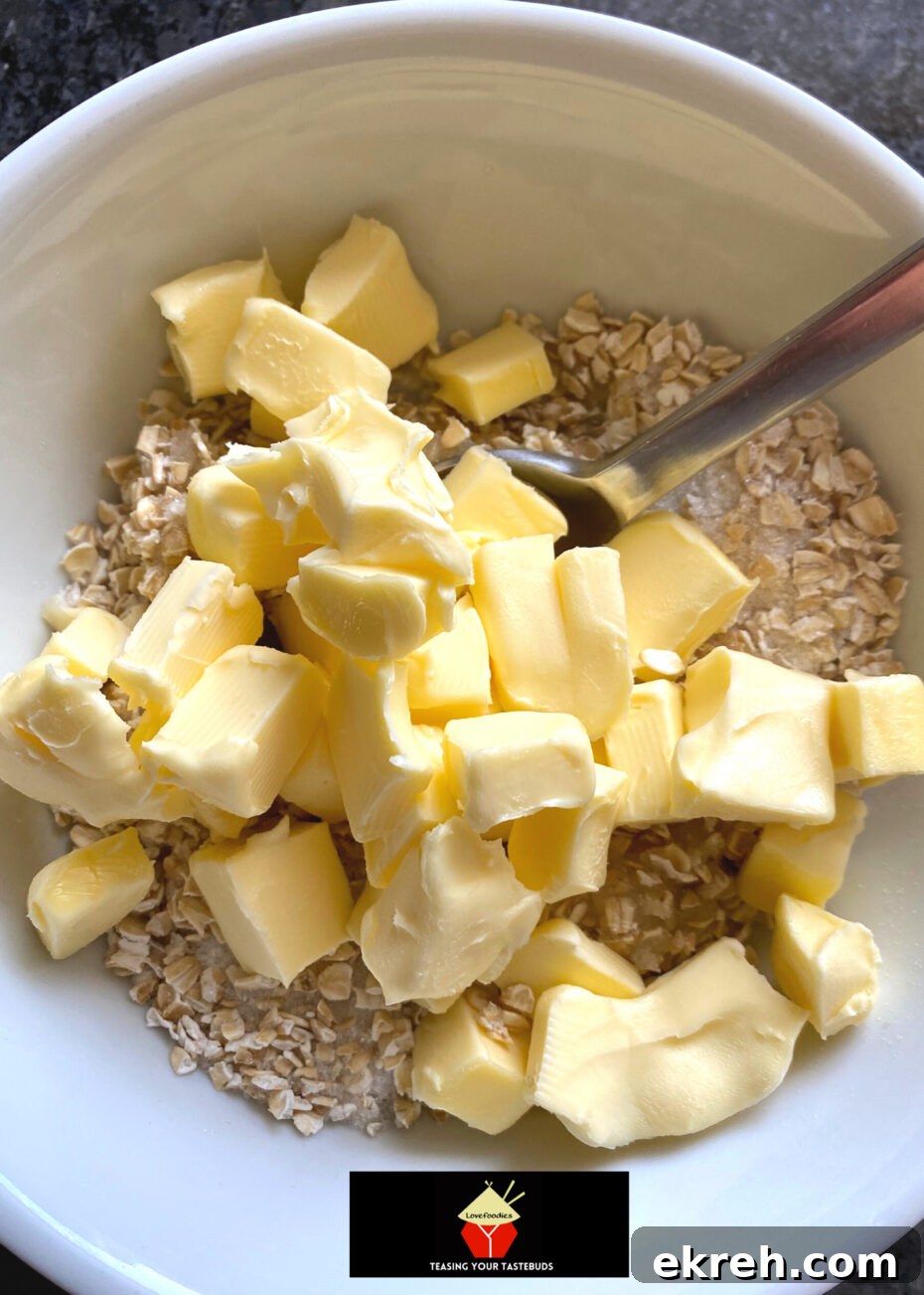
6. While the cake bakes, make the topping: combine sugar, oats, milk, and cubed butter in a small bowl. Use two round-bladed knives or a pastry cutter to blend the mixture into large clumps.
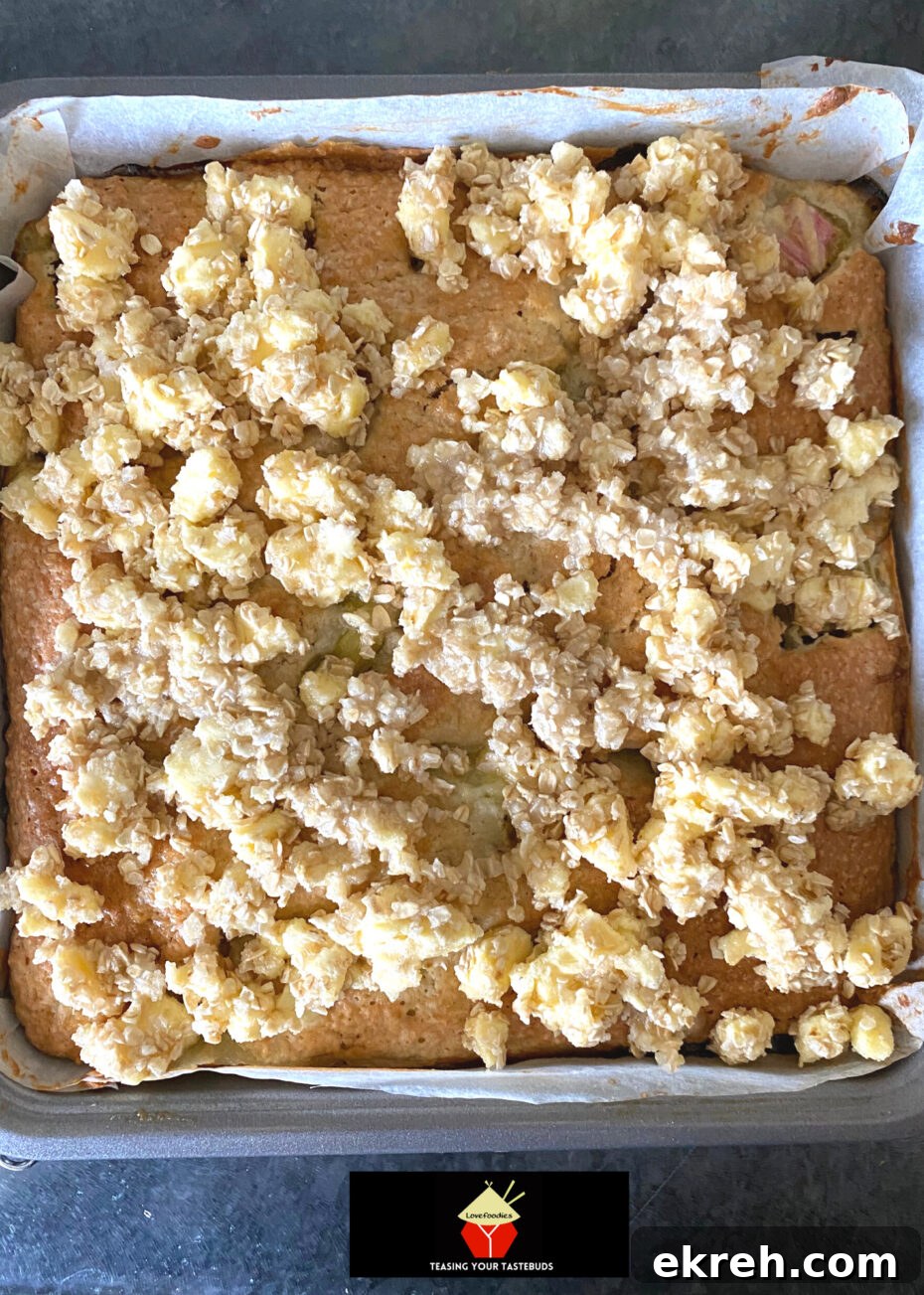
7. When the cake comes out of the oven, spread the topping evenly over the surface. Place the pan under a hot broiler or grill for a short time, watching carefully, until the topping bubbles and turns lightly golden.
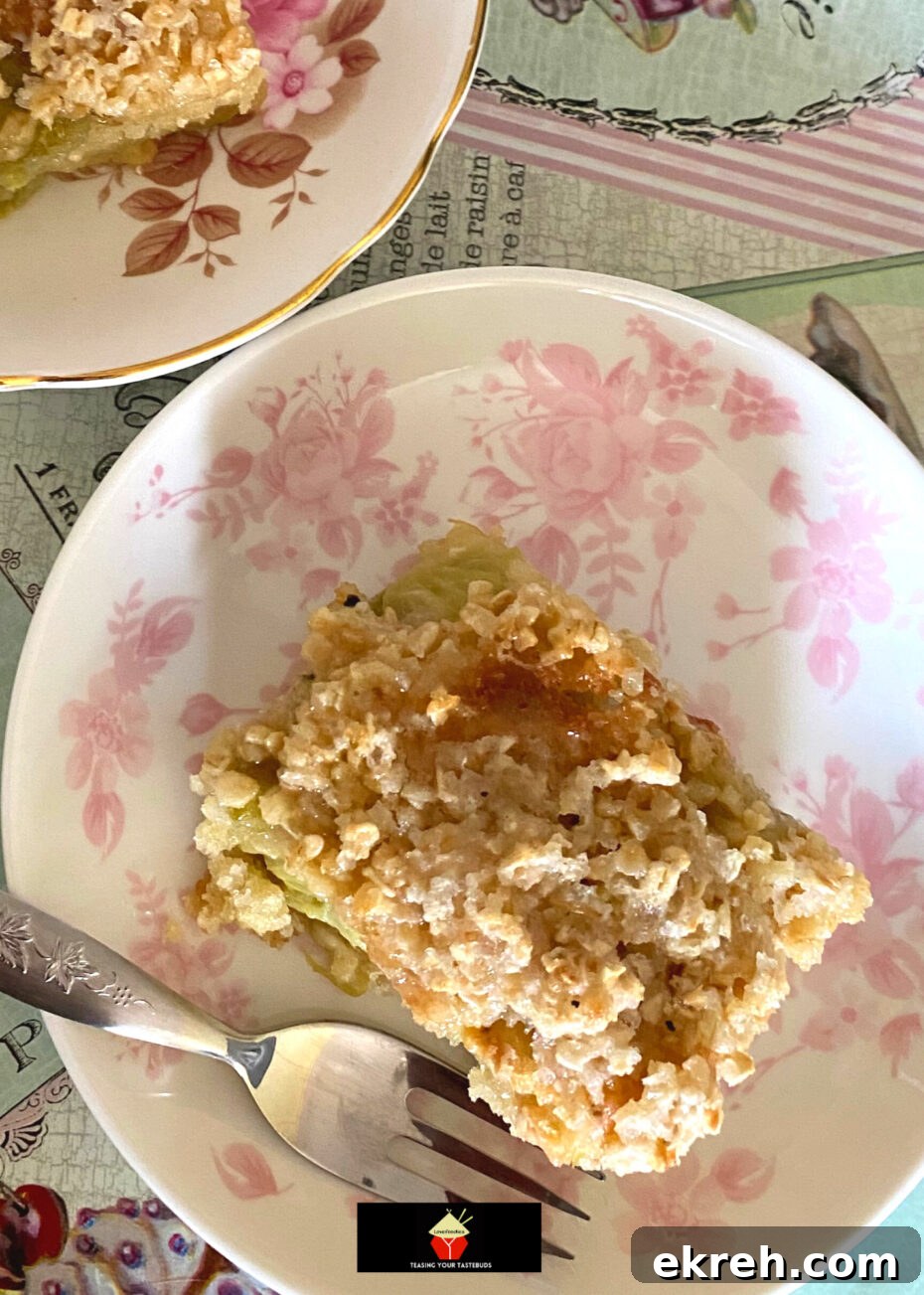
8. Remove the pan from the oven and let the cake rest for 20 minutes. Transfer the cake to a cooling rack and slice once cooled slightly. Serve warm or at room temperature.
Store leftovers in an airtight container for up to 3–4 days. This cake is lovely on its own or served with fresh whipped cream, custard, or ice cream.
Notes: If you substitute fruit, choose similar quantities so the batter’s moisture stays balanced. Keep an eye on the topping under the broiler—it can go from golden to burnt quickly. Allow the cake to rest before slicing to help it hold together and retain its texture.
Lazy Daisy Rhubarb Oatmeal Cake
Yield: 12 servings
Prep Time: 10 minutes
Cook Time: 55–60 minutes
Total Time: About 1 hour 5 minutes
Ingredients
- 1 & 1/4 cups (300 ml) boiling milk
- 1 cup (155 g) quick or old-fashioned oats
- 5 tablespoons butter, softened
- 1 & 1/2 cups (300 g) sugar
- 1 teaspoon vanilla extract
- 1 & 3/4 cups (220 g) all-purpose flour
- 1 teaspoon baking powder
- 1/4 teaspoon salt
- 1 egg, beaten
- 14 oz (400 g) rhubarb, cut into 1-inch pieces
Topping
- 1/2 cup (100 g) sugar
- 1/2 cup (80 g) oats
- 3 tablespoons milk
- 2 tablespoons butter, cubed
Instructions
- Preheat oven to 350°F (170°C). Grease and line an 8-inch square pan.
- Pour boiling milk over oats and let soften.
- Beat butter and sugar, then add egg and vanilla.
- Stir in oat mixture, flour, baking powder, and salt. Fold in rhubarb.
- Pour into pan, bake 55–60 minutes until a toothpick comes out clean.
- Mix topping ingredients into clumps and spread over the hot cake.
- Broil briefly until the topping bubbles and turns lightly golden.
- Let rest 20 minutes in the pan, then transfer to a rack and slice when cooled.
Nutrition (approx.): 358 calories per serving; 9g total fat; 64g carbohydrates; 6g protein. Nutrition estimates may vary.
We’d love to hear how your cake turned out. If you tried any variations or substitutions, share your experience so others can try your ideas. Happy baking!