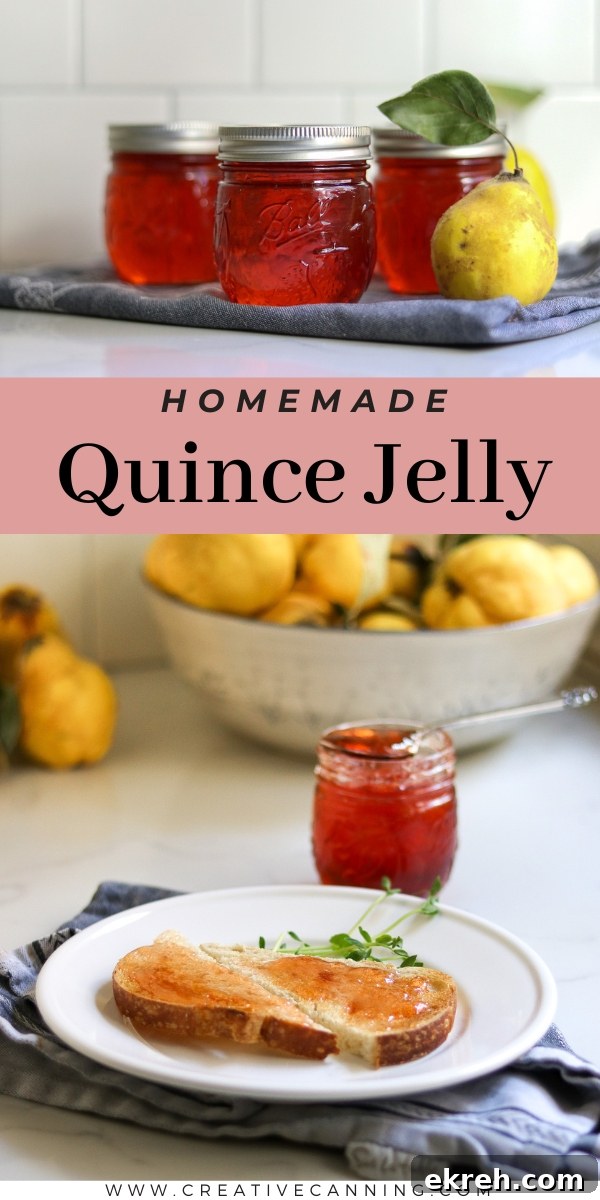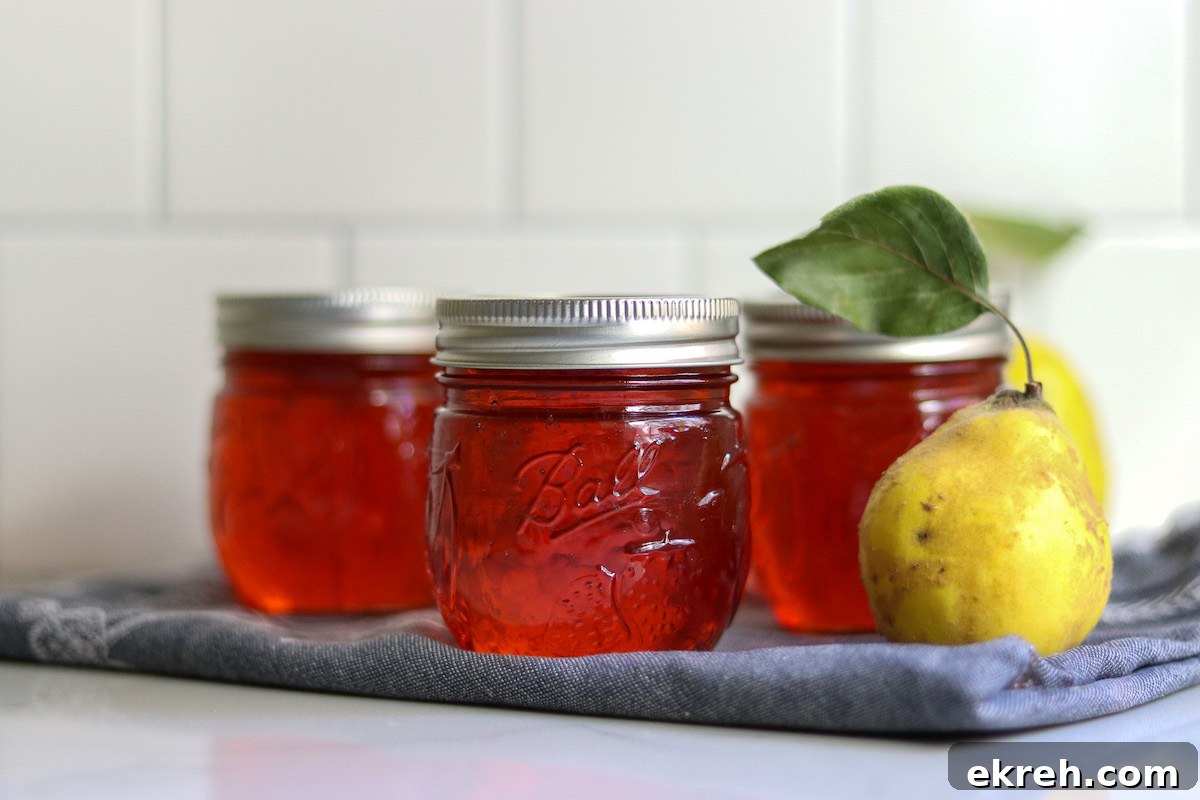
Quince jelly is an elegant, simple way to preserve quince, locking the fruit’s floral perfume and rosy flavor into jars you can enjoy year-round.
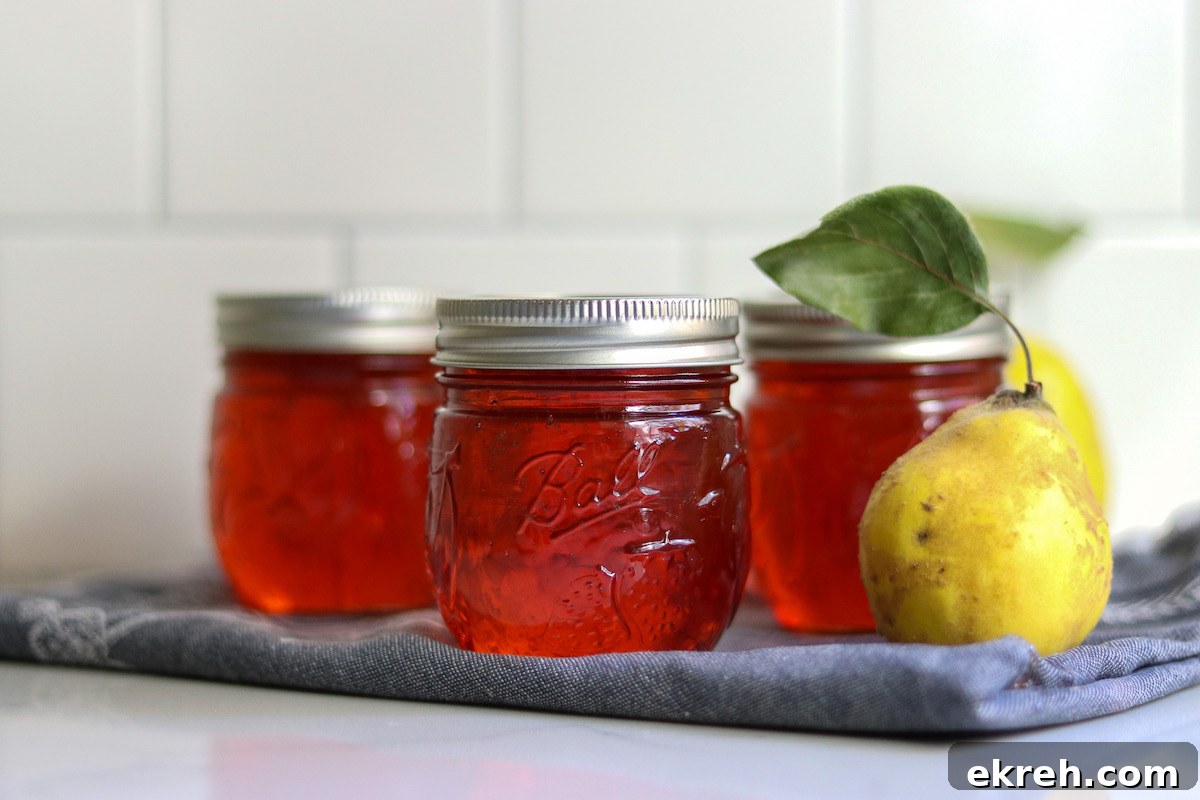
Quinces were one of the first trees we planted on our Vermont homestead and quickly became a favorite in our kitchen. They have the sweet texture of a pear with a distinct, floral aroma—often compared to rose water—that feels exotic compared with their rough, knobbly exterior.
Fresh quinces are hard and astringent, and while their scent is irresistible, they must be cooked before eating. Slowly cooked quince softens, sweetens, and turns a beautiful rosy shade. Because of that transformation, quince is particularly well suited for preserves like jam, jelly, and the Spanish membrillo (quince paste).
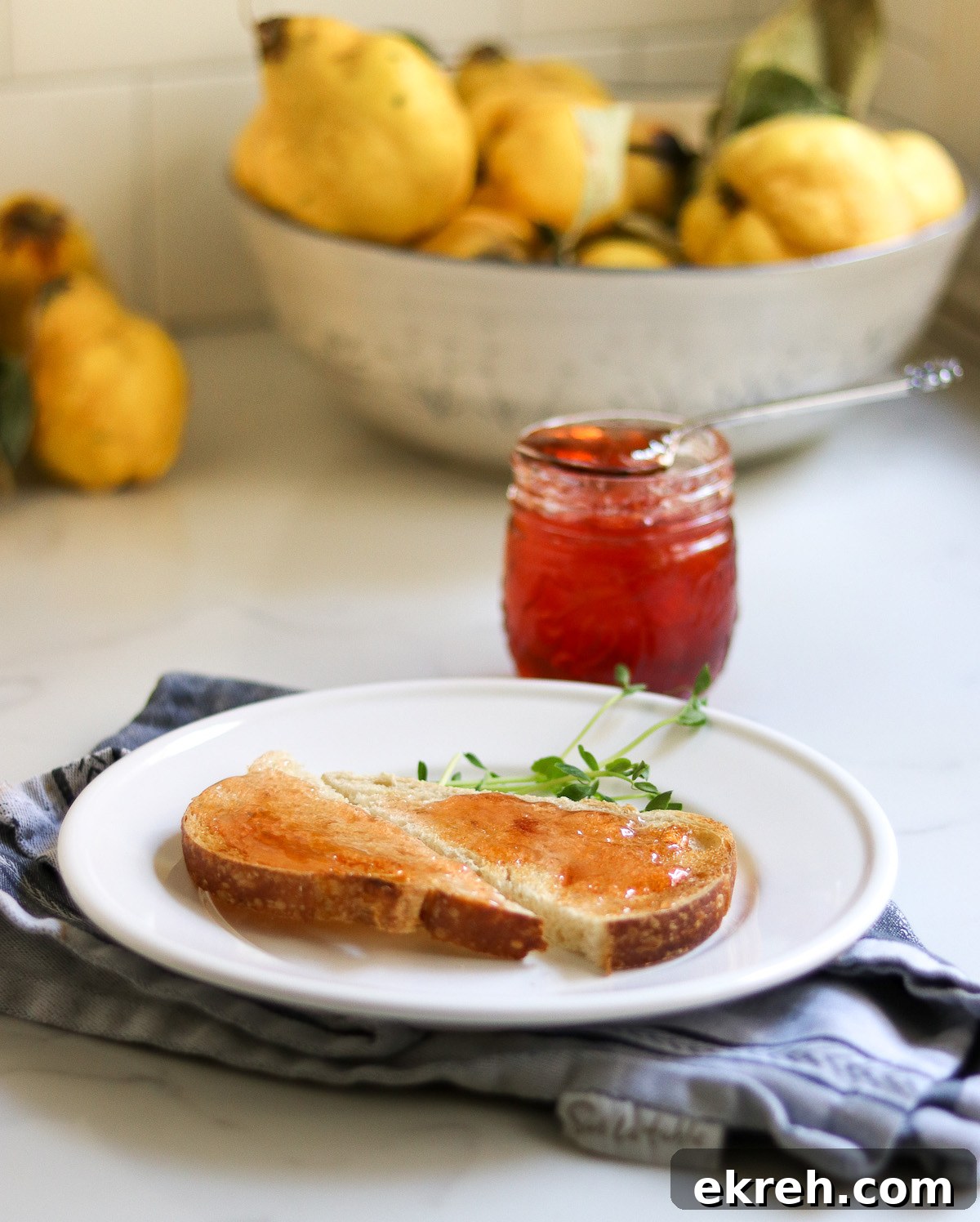
What are quince?
Quince are pear-like fruits from trees in the rose family. Historically popular—especially in medieval cooking—they fell out of favor in modern markets because they can’t be eaten raw. Once cooked, however, quince becomes sweet, aromatic, and visually stunning, which makes it ideal for preserves.
Because much of the fruit’s character is in the skin, cooks often leave the peels on during cooking. The peels break down and add both pectin and aroma to the resulting liquid, which helps the jelly set without added commercial pectin.
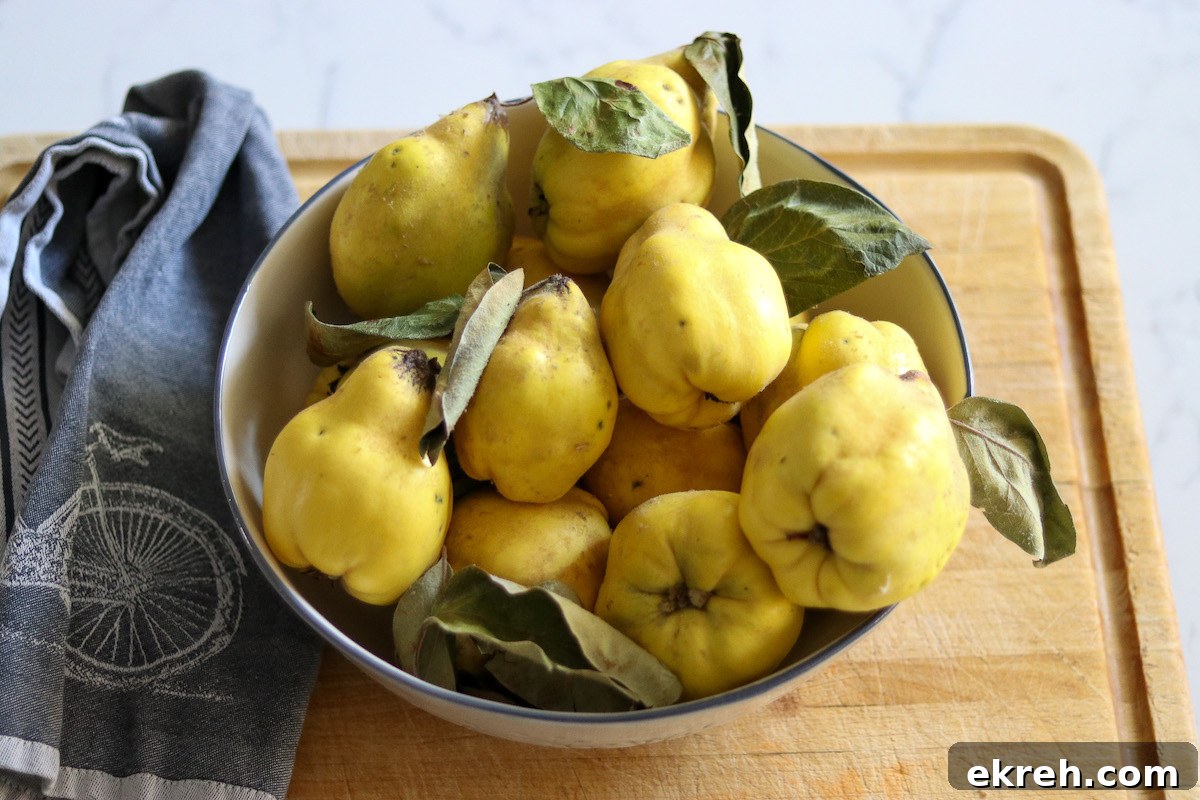
Ingredients for quince jelly
This simple quince jelly needs only a few ingredients. Quince contain natural pectin and enough acidity that additional acid for safety isn’t strictly required, but lemon juice brightens the flavor and balances the sweetness.
- 5 lbs (2.3 kg) quince
- 3 quarts water
- 4 cups (800 g) granulated sugar (or 1 cup sugar per cup of strained juice)
- 1/2 cup fresh lemon juice (juice of 2–3 medium lemons), optional but recommended for flavor
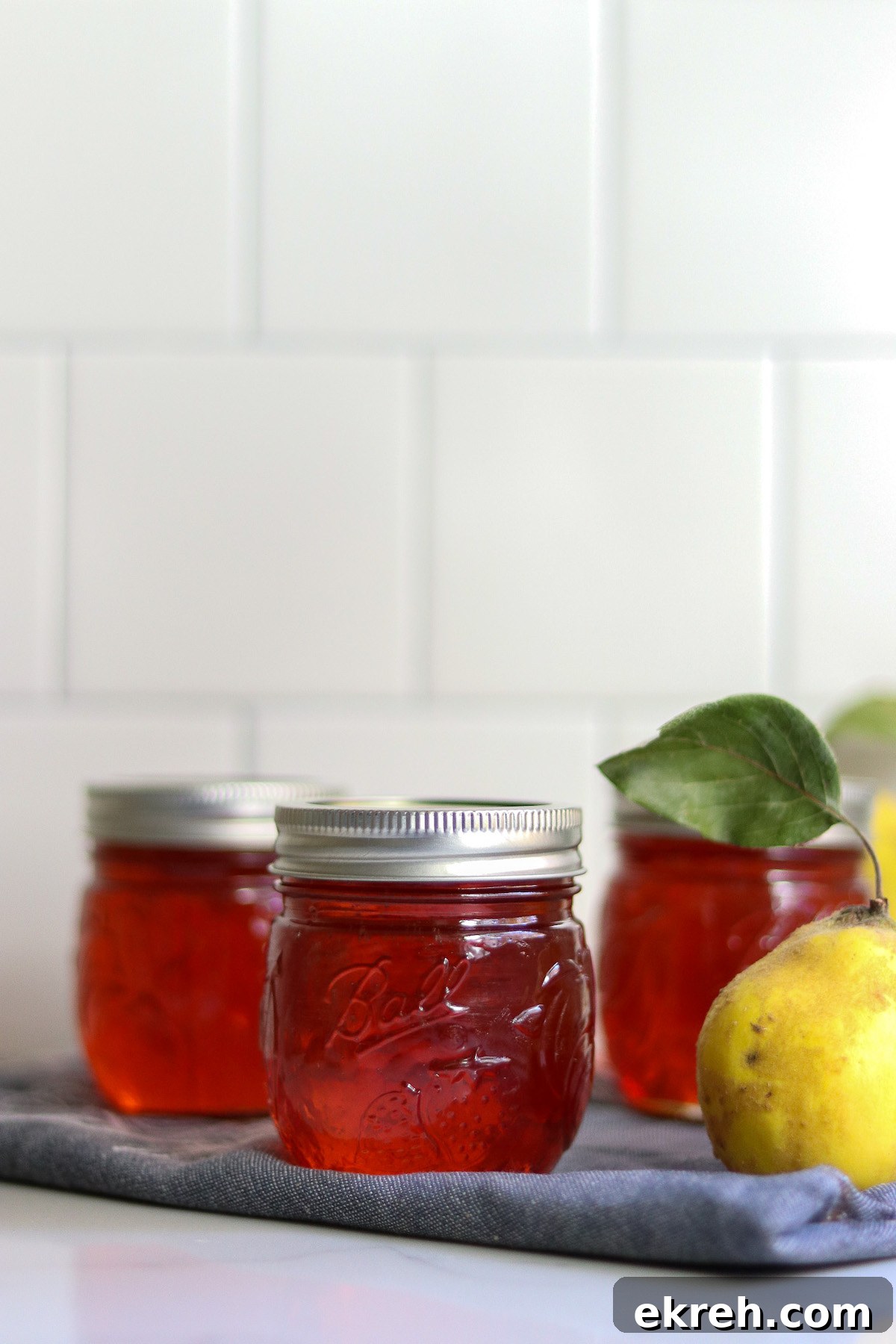
Recipes for quince jelly are traditional; writers as far back as the 16th century praised quince preserves. One historical note describes quince jelly as “supreme in appearance, quality, flavor and excellence,” a preserve worthy of a king and built to keep.
How to make quince jelly
Making quince jelly is mostly about time and patience. Below is a straightforward method that yields about four half-pint (8 oz) jars.
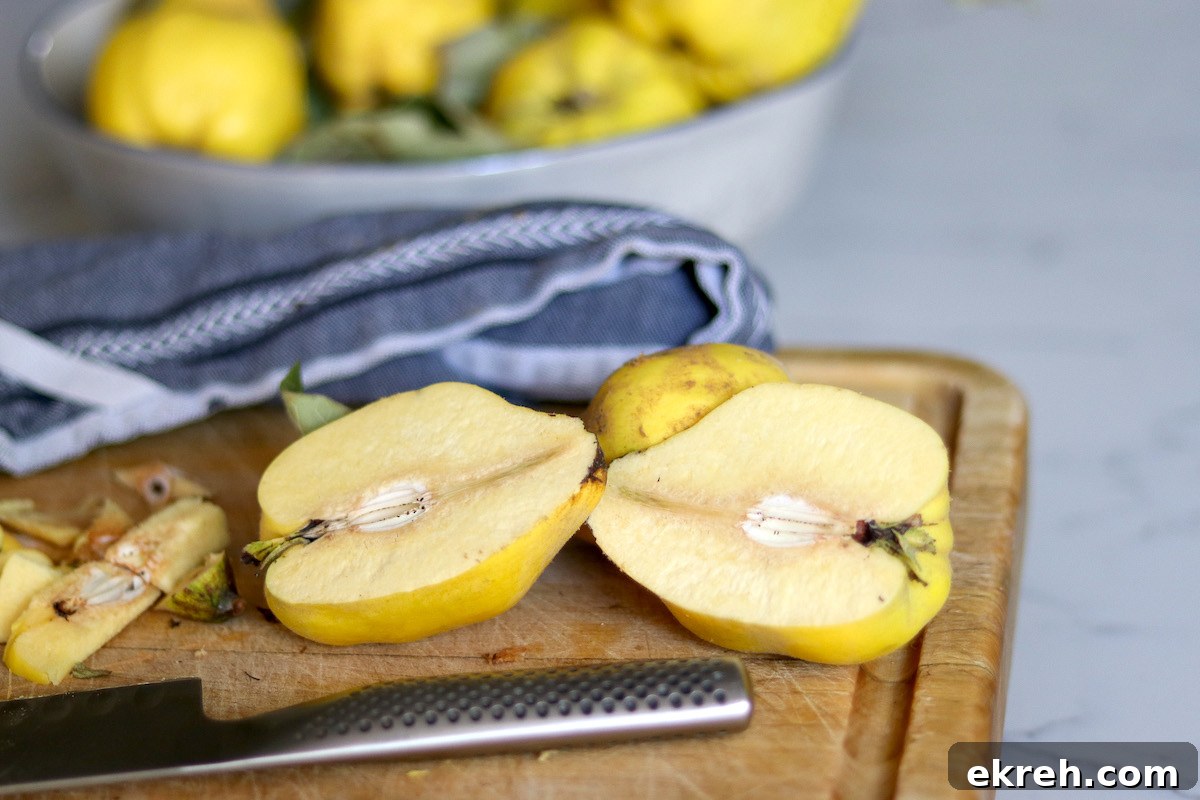
Prepare the fruit
Core and coarsely chop the quince. Peeling is optional; leaving the peels on adds pectin and aroma and is traditional. If you plan to reuse the cooked pulp for quince paste or sauce, coring first makes that easier.
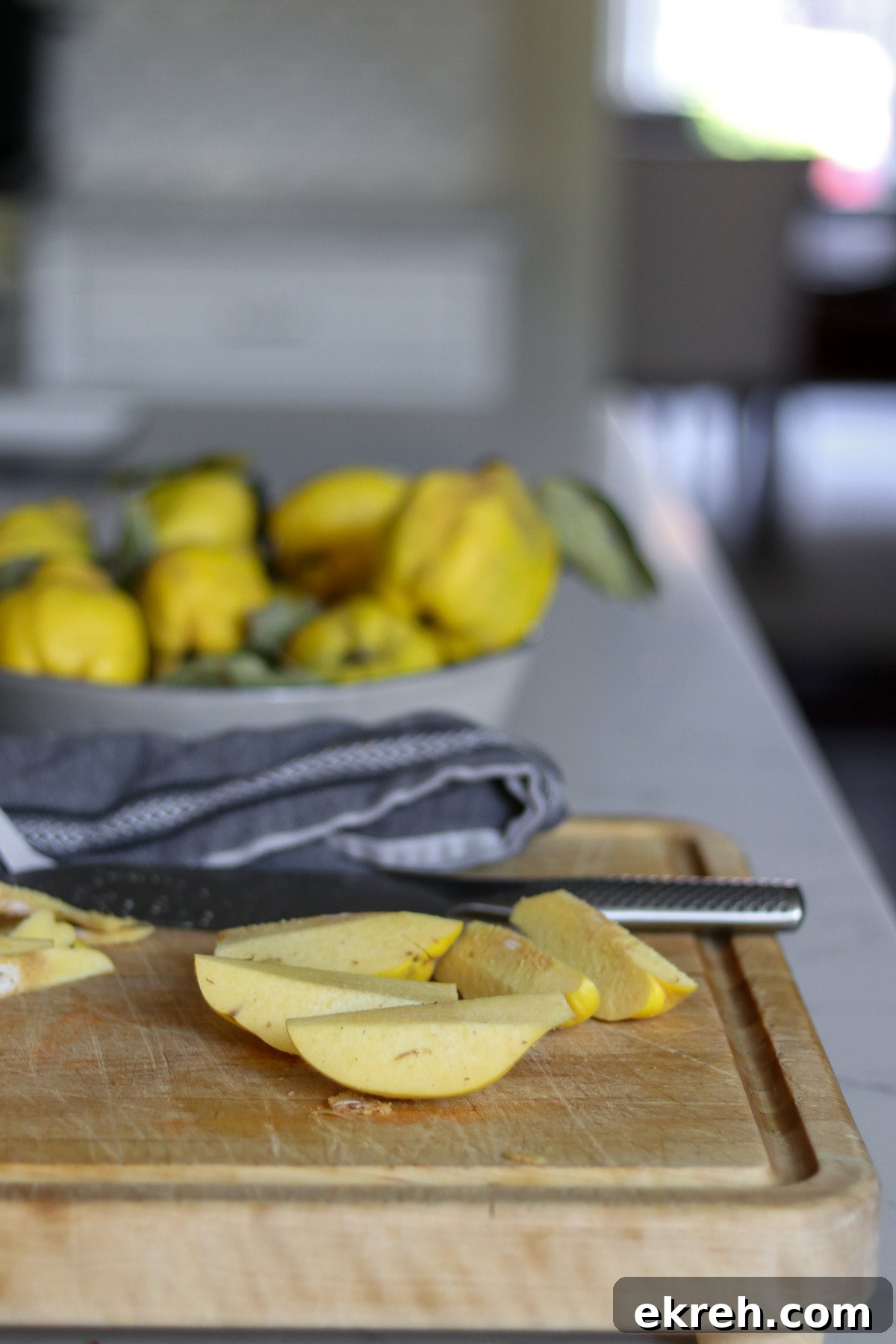
Extract the juice
- Place the chopped quince in a stockpot and cover with about 3 quarts of water.
- Bring to a boil, then reduce to a gentle simmer. Cook 2–3 hours until the fruit is soft and the cooking liquid has reduced by roughly half and taken on a rosy tint. If evaporation is too fast, add a little more water.
- Turn off the heat and allow the mixture to cool slightly. Strain through a jelly bag or a fine mesh strainer lined with damp cheesecloth. Let it drip naturally for several hours; do not squeeze the bag, as squeezing can cloud the jelly.
- You should collect roughly 5 cups of clear quince juice. Store it in the refrigerator up to three days or proceed to the next step.
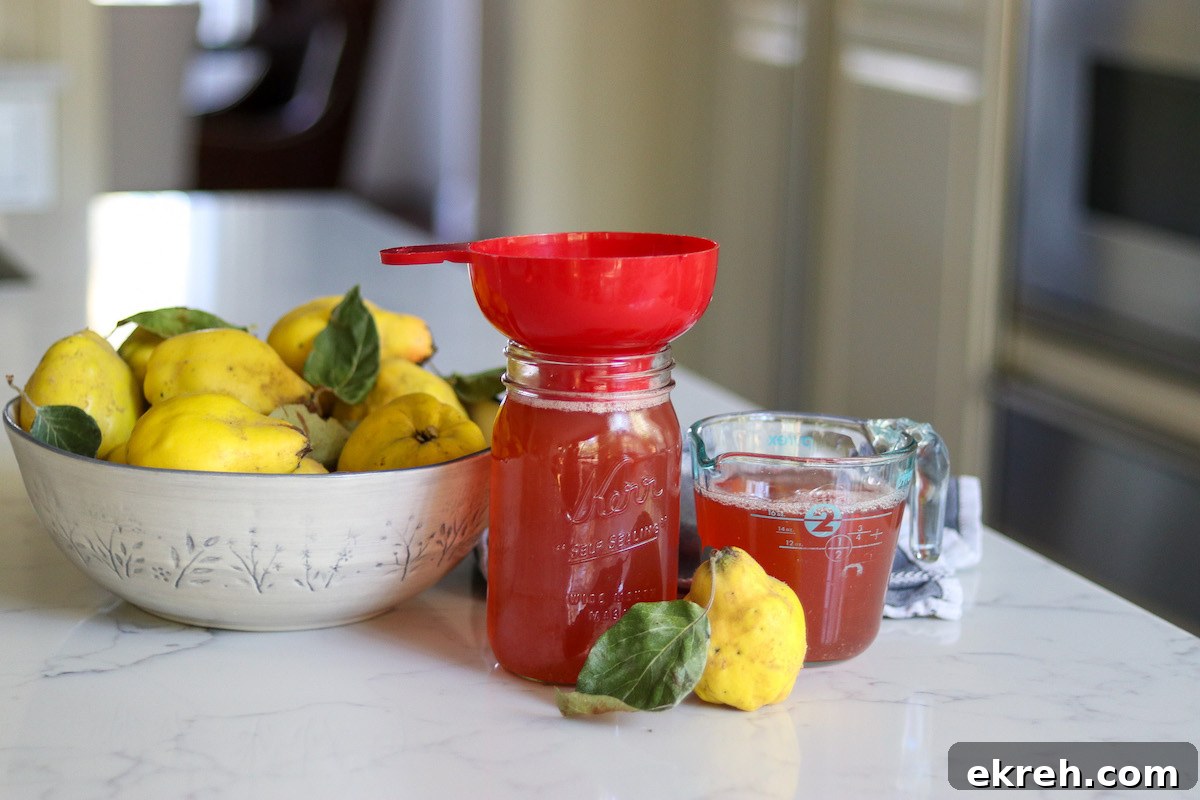
Cook the jelly
- Measure the strained juice. For each cup of juice, add one cup of granulated sugar. For about 5 cups juice, use about 5 cups sugar.
- Stir in 1/2 cup fresh lemon juice (optional but recommended).
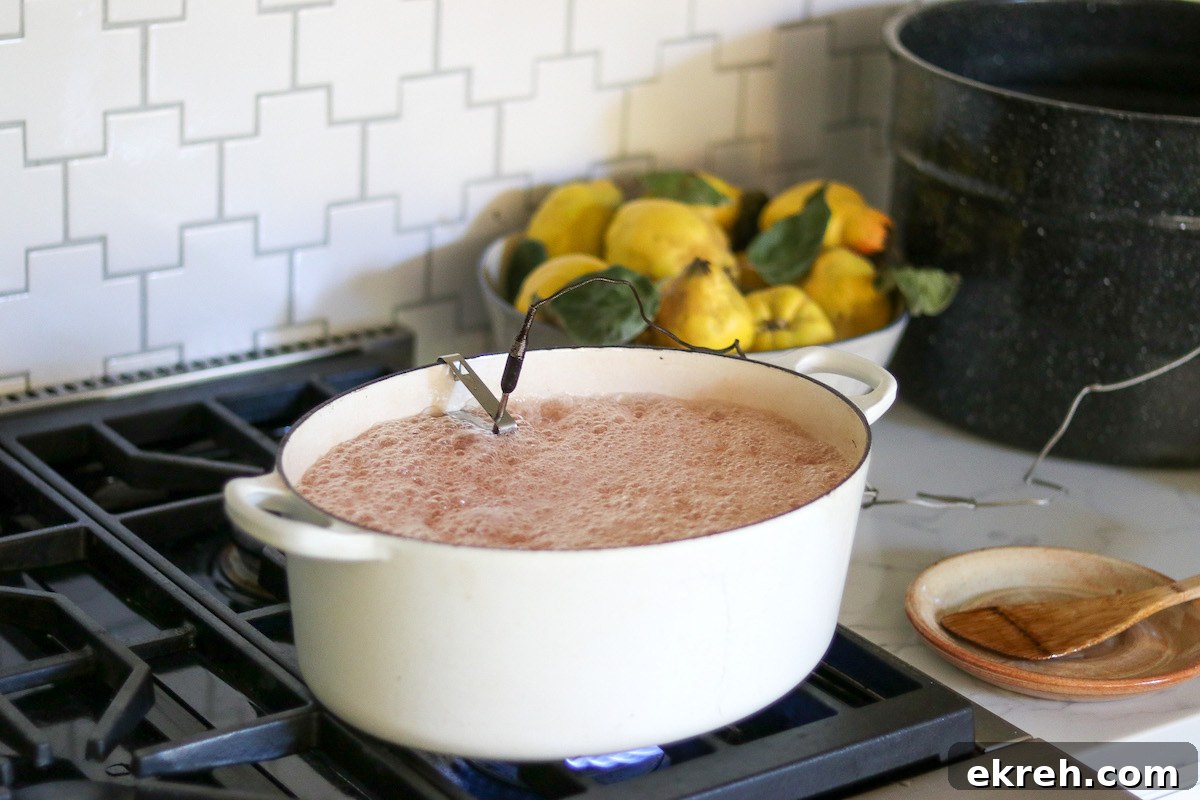
- Bring the mixture to a vigorous boil over high heat and cook until it reaches the gel stage—typically 15–25 minutes. A candy thermometer is helpful: jelly sets at 220°F (105°C) at sea level (adjust downward slightly for elevation).
- If you don’t have a thermometer, test by spooning a small amount onto a chilled plate. If it wrinkles when nudged with a finger, it’s set.
- Remove from heat and ladle into prepared jars, leaving 1/4 inch headspace.
Canning quince jelly
Canning is optional but recommended for pantry storage. If you plan to can:
- Prepare a water bath canner, clean jars, lids, and rings while the jelly is cooking.
- Fill jars leaving 1/4 inch headspace, remove air bubbles, wipe rims, and seal with lids and bands.
- Process jars in a boiling water bath for 10 minutes (increase to 15 minutes if you are above 6,000 feet elevation).
- Remove jars with a lifter and cool on a towel. After 12–24 hours, check seals and refrigerate any jars that failed to seal.
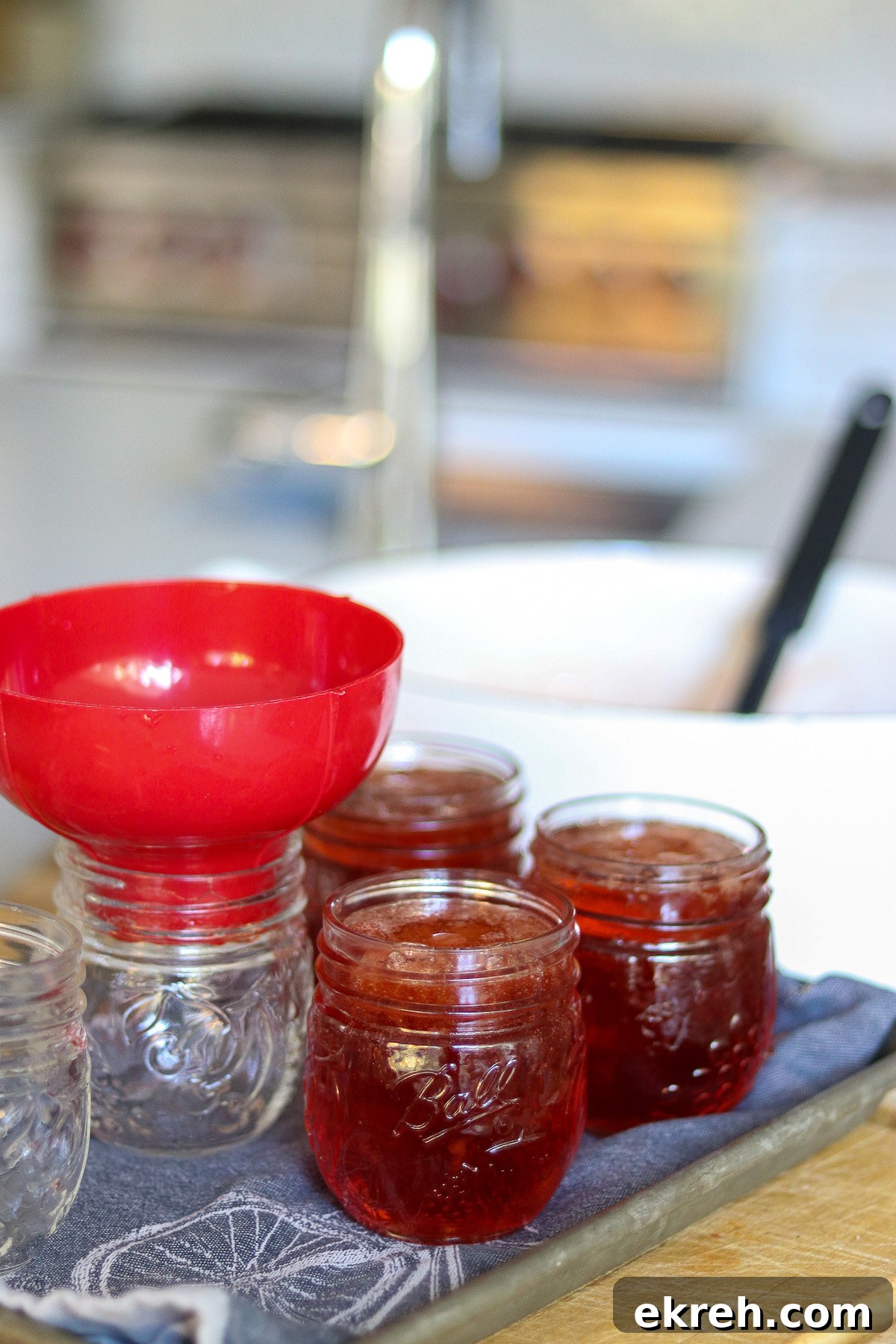
Properly sealed jars will keep at peak quality for about 18 months on the pantry shelf. Refrigerate after opening.
Other quince ideas
If you enjoy working with quince, try these related preserves and preparations: membrillo (Spanish quince paste), quince jam, canned quince halves, quince wine, or quince liqueur. Quince pulp left after juicing can be made into sauce, jam, or paste.
Notes & tips
- Lemon juice: Primarily for flavor. Quince are naturally acidic enough for canning, but fresh lemon brightens the jelly. Zest can be added for extra lemon character.
- Sugar alternatives: You can experiment with honey, but honey will affect set and color. For true low-sugar jellies, use a low-sugar pectin designed for reduced-sugar preserves.
- Batch size: Doubling the recipe is fine; very large batches can be difficult to cook evenly and may not gel reliably.
- Storage: Refrigerator jam will keep several weeks; jelly can be frozen for months if stored with adequate headspace in freezer-safe containers.