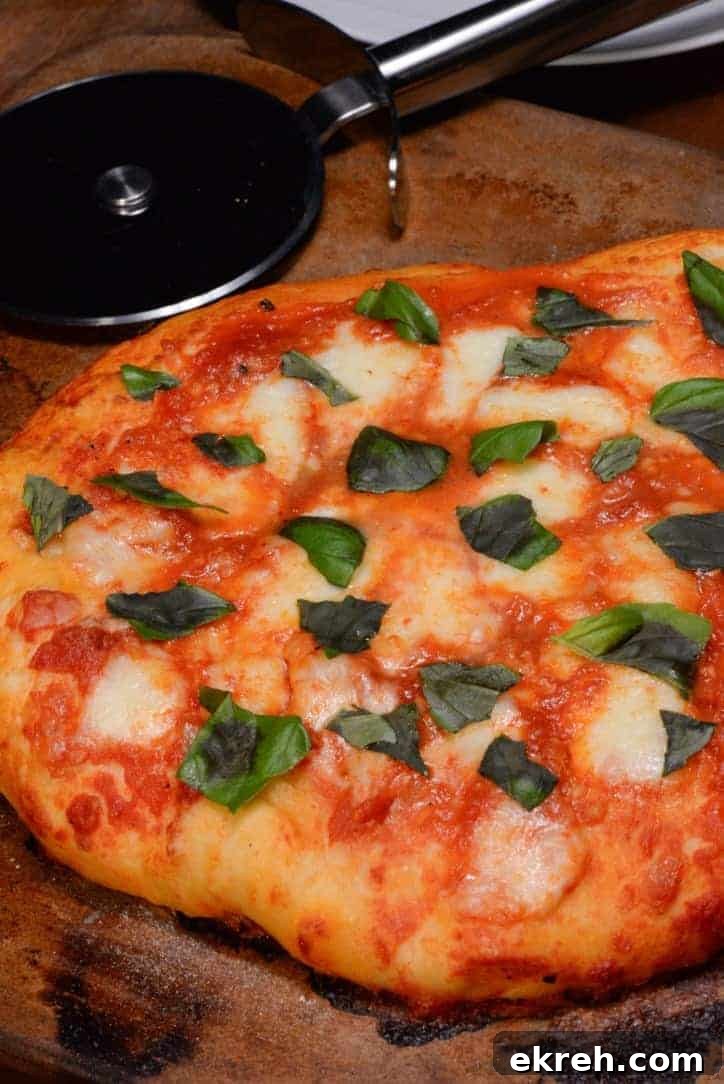
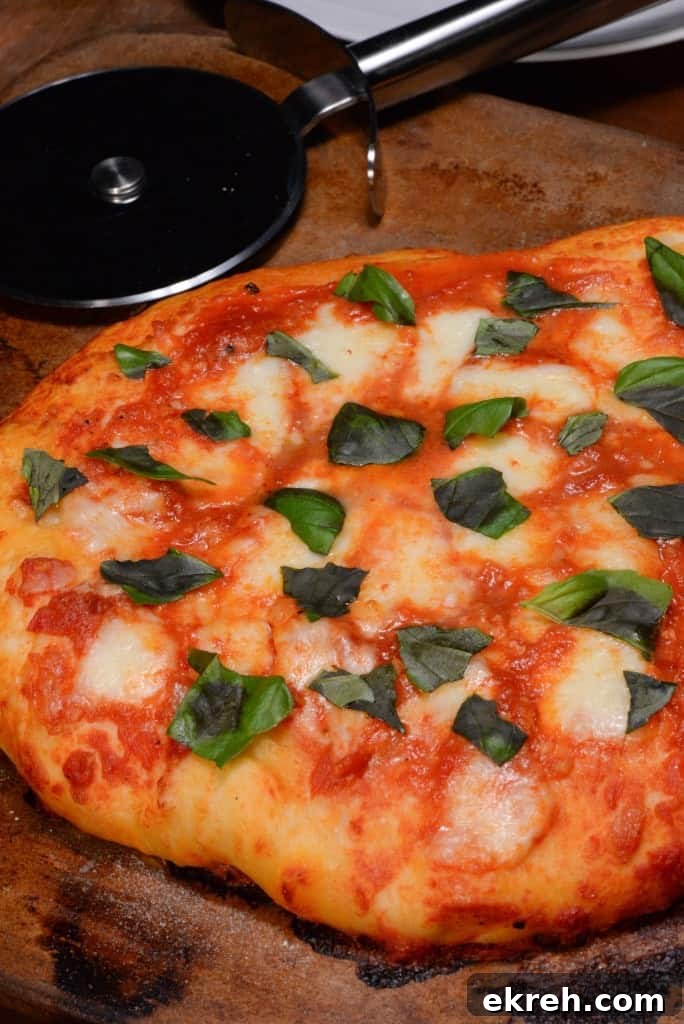
Italian Pizza Margherita takes its name from Queen Margherita of Italy. In 1889 a Neapolitan pizza maker created this simple pizza to reflect the colors of the Italian flag — red tomato, white mozzarella, and green basil — and presented it in her honor. The Queen enjoyed it, and the pizza has become a classic ever since.
This recipe celebrates that same straightforward approach: fresh tomato sauce, creamy mozzarella, and fragrant basil on a tender crust. True Neapolitan pizza is traditionally baked in a wood-fired oven at very high temperatures. You can reproduce the flavor and texture at home in a regular oven with a few techniques: preheat a pizza stone or heavy baking steel, bake on the lowest oven rack to help the crust brown, and use high-quality ingredients.
A small personal note: when I first followed a traditional dough technique, I formed a mound of flour with a large crater in the center to hold the yeast mixture. My crater was too small and the liquid overflowed—picture a mini Mt. Vesuvius eruption of yeast and water across the counter. I managed to contain it, and the dough turned out perfectly. An old Italian habit I kept was scoring a cross on the dough before letting it rise — a time-honored tradition some bakers still follow. The practical takeaway: make the crater large enough and you’ll avoid kitchen drama.
While you can customize toppings to your taste, Pizza Margherita remains beloved for its simplicity. Use a good-quality peeled tomato for the sauce, fresh mozzarella rather than pre-shredded cheese, and fresh basil added after baking so the leaves remain bright and aromatic.
If you enjoy exploring food and culture, follow along on social media like Instagram, Facebook, Pinterest, and YouTube to see more recipes and travel-inspired dishes. Please note: some product recommendations may include affiliate links, and a small commission may be earned at no extra cost to you. Thank you for your support.
Italian Pizza Margherita
Course: Main Dish
Cuisine: Italian
Prep Time: 5 hours
Cook Time: 25 minutes
Total Time: 5 hours 25 minutes
Servings: 4 pizzas
Author: International Cuisine
Ingredients
- 600 mL warm water
- 1 kg (about 7 cups) flour, type “00” or sifted all-purpose flour
- 25 g fresh yeast, or 2 teaspoons (7–8 g) active dry yeast
- 6 tablespoons extra virgin olive oil, plus extra for brushing and greasing
- 1.5 teaspoons salt
- 2 teaspoons sugar
- For the sauce:
- 2 tablespoons extra virgin olive oil
- 1/4 medium onion, diced
- 3 cloves garlic, minced
- 1 can peeled whole tomatoes in puree (San Marzano if available), roughly chopped
- 1 sprig fresh thyme
- 1 sprig fresh basil
- 2 teaspoons salt (adjust to taste)
- Freshly ground black pepper, to taste
- For the pizza:
- 1 lb (about 450 g) fresh mozzarella cheese, sliced or torn
- Handful of fresh basil leaves, torn or left whole for garnish
Instructions
- In a medium bowl, dissolve the yeast in the warm water. The water should be comfortably warm — not hot — to activate the yeast without killing it.
- On a clean work surface, heap most of the flour into a mound and form a large crater in the center.
- Pour the yeast-and-water mixture into the crater along with the olive oil, salt, and sugar. Gradually incorporate flour from the sides into the liquid until a shaggy dough forms.
- Knead the dough for 10 to 15 minutes until it is smooth, elastic, and slightly tacky. Keep the surface lightly floured to prevent sticking.
- Lightly grease a bowl with olive oil and place the dough inside, turning it so the surface is lightly oiled. Cover and let the dough rise in a warm spot for at least four to five hours, until noticeably puffed.
- Traditionally, some bakers make a small cross on the dough before letting it rise; this is an old custom. It is optional and does not affect the final result.
- About 30 minutes before baking, preheat your oven to 400°F (200°C). If you have a pizza stone or baking steel, place it on the lowest rack and allow it to heat thoroughly.
- Turn the risen dough out onto a floured surface and gently punch it down to release large air bubbles. Divide the dough into two portions and let them rest for a few minutes.
- Roll or stretch each portion into a roughly 12-inch disc. You can make the crust thinner if preferred; it will rise slightly in the oven.
- Transfer each shaped dough to an oiled pizza pan or a peel dusted with semolina or flour for easier transfer to the stone.
- Spread a thin layer of tomato sauce over the dough, leaving a border for the crust. Brush the crust edges lightly with olive oil.
- Bake the pizzas on the preheated stone or baking sheet for about 10 minutes. Then add slices or torn pieces of fresh mozzarella on top and continue baking until the crust is golden and the cheese is melted and bubbling. Check the bottom of the crust by lifting the pizza to ensure it is browned.
- Remove the pizzas from the oven, garnish with fresh basil leaves, slice, and serve immediately.
Tomato Sauce
- Heat 2 tablespoons olive oil in a saucepan over medium heat.
- Sauté the diced onion and minced garlic until they are softened and just lightly golden.
- Add the chopped canned tomatoes and the herb sprigs. Bring to a simmer.
- Lower the heat and simmer, covered, for about 10 minutes to concentrate the flavors.
- Remove and discard the herb sprigs, then stir in the salt and pepper to taste. The sauce can be used warm or cooled slightly before spreading over the dough.
Tips: Use fresh, high-quality mozzarella and ripe tomatoes when possible. A preheated pizza stone or steel helps create a crisp bottom crust closer to wood-fired pizza. Allowing the dough to rest and ferment develops flavor and improves texture.